-
The Sentence al-Sharaa Did Not Say: al-Zawahiri’s Oath of Allegiance, al-Qaeda, and the Limits of What We Know
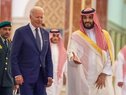
On the evening of September 22, 2026, just a few kilometers from the site of the Twin Towers, Syrian President Ahmad al-Sharaa sat across from Brett McGurk on the Atlantic Council stage in New York. The city had commemorated the twenty-fifth anniversary of the September 11 attacks only days earlier, and McGurk did not allow the symbolism to pass unnoticed. He reminded his guest that, in 2013, he had pledged allegiance to Ayman al-Zawahiri, then the leader of al-Qaeda and one of the masterminds of those attacks. He then told him plainly that he wanted to give him an opportunity to renounce that oath.
The question was not a trap. It was the easiest possible way out for a man seeking to close the file on his past: one sentence, apparently cost-free, before an international audience waiting to hear it. Al-Zawahiri had been killed in Kabul four years earlier, the organization led by al-Sharaa had been dissolved, UN sanctions against him had been lifted, and he had been received at the White House. He was not being asked to take a decision against an existing organization or a living emir, but simply to say that an old chapter had ended and that he rejected it.
But he did not say it. He first replied that he had nothing to do with the September 11 attacks and that he had been thirteen years old at the time. When McGurk returned to the same question, al-Sharaa said that many questions had become matters of the past, that he did not believe the time was right to discuss events that had taken place twenty-five years earlier, and that he had been a different age, living under different regional circumstances that had pushed many young people in that direction. He added that he had addressed the issue before and that his views had evolved. He was pressed twice, and on neither occasion did he explicitly renounce the oath.
The difference in his language is the heart of the story. On September 11, he was categorical: *I had nothing to do with it.* On the oath of allegiance, he was historical, contextual, and evasive. There is also a chronological detail that reveals how the answer was constructed: the oath he was asked about was announced in April 2013—thirteen years ago, not twenty-five. Twenty-five years is the age of the September 11 attacks. Through this small shift, the answer moved from a question he did not want to answer to one he could answer easily, and from the responsibility of an adult who had made a political and organizational decision at the age of thirty to the innocence of a thirteen-year-old child.
This proves nothing about al-Sharaa’s loyalties today. But it does make his refusal to issue an explicit renunciation a documented fact rather than a journalistic impression. The serious analytical question is not: *Is the man still an al-Qaeda member?* It is: *Why was he unable—or unwilling—to say the simplest sentence that would have closed the matter when it was put to him?*
To answer that question, one must return to the way the relationship between al-Jolani and al-Qaeda came to an end, because the conventional account—“the two broke ties in 2016, and that was the end of it”—is far simpler than the facts.
A 2018 investigation by Charles Lister, published in the Combating Terrorism Center’s *CTC Sentinel* and based on testimonies from within Jabhat al-Nusra and its surrounding circles, reconstructs what happened in the summer of 2016. The shura council was divided between those who viewed a break as necessary; those who considered it invalid without al-Zawahiri’s authorization; and those who proposed a middle path: severing the organizational relationship with al-Qaeda outside Syria while maintaining close consultative ties with its leadership inside the country, and presenting the move to the outside world as a complete separation.
Several weeks after the announcement of “Jabhat Fatah al-Sham,” a secret message arrived from al-Zawahiri reprimanding al-Jolani and describing what had happened as an “act of disobedience.” Sami al-Uraydi, the former chief religious official of al-Nusra, later testified that al-Jolani and Abd al-Rahim Atoun had presented the move to its internal opponents as more of a media maneuver than a genuine break.
But the process did not stop there. With the establishment of Hay’at Tahrir al-Sham in early 2017, the maneuver evolved into an actual rupture with al-Qaeda. In November of that year, the Hay’at arrested al-Qaeda loyalists, including al-Uraydi and a member of the central organization’s shura council. Al-Zawahiri responded by publicly condemning what he called a breach of the covenant, insisting that an oath of allegiance was a binding contract that could not be broken. The confrontation with Hurras al-Din, and its suppression in 2020, followed.
Two facts therefore need to be stated together. The organizational split did take place, and it cost both sides blood, imprisonment, and reciprocal religious rulings. At the same time, al-Jolani never issued a text definitively settling the status of his personal oath in the way he settled the institutional relationship. Al-Qaeda said it had not released him from the oath, and he never said that he had revoked it. Leaving this space unresolved served him at every stage: in the West, it was enough to say that the organization had separated; within his jihadist milieu, there was no need to issue a declaration that could be read as a betrayal of the covenant.
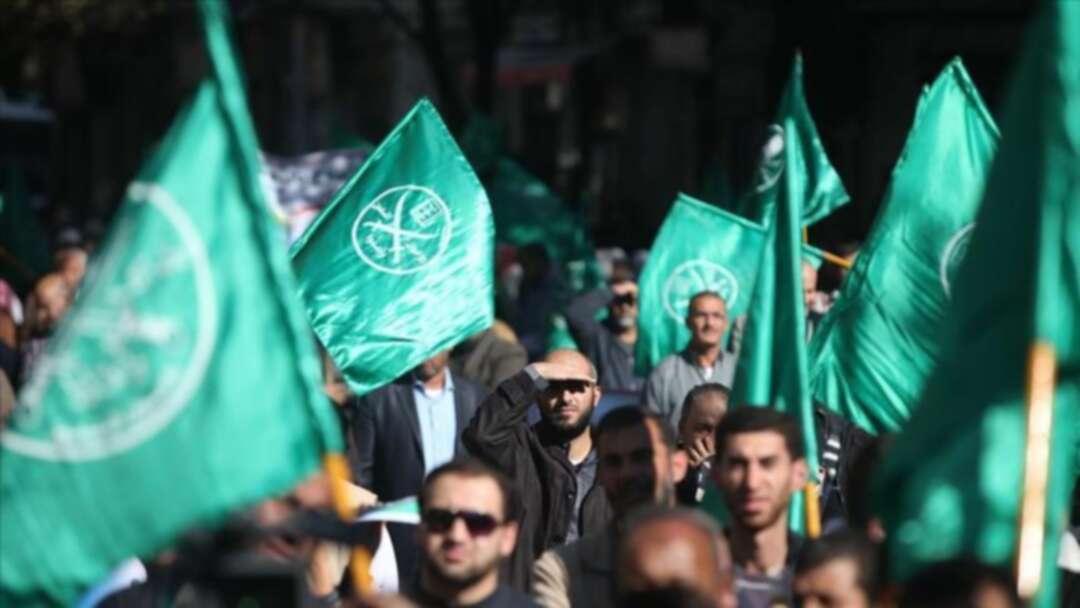
This is why the issue must be read in the language of the milieu from which al-Sharaa emerged, not solely in the language of Western conferences.
In Salafi-jihadist literature, an oath of allegiance is not an administrative procedure that can simply be canceled by a statement. Breaking it is considered treachery, and treachery is among the most serious accusations that can be leveled against a person in that milieu. Accordingly, the sentence “I revoked my oath” is not merely an update to one’s biography; by the standards of one’s military and ideological constituency, it is a public admission of having committed what that milieu regards as a grave sin.
The alternative—saying that the oath was invalid from the outset—would require issuing a religious judgment against al-Qaeda itself, opening a confrontation with thousands of former fighters who remain part of the state’s military structure. The formulation al-Sharaa chose—“age and circumstances”—avoids both possibilities. It explains the past without condemning it, and places it in the realm of history without openly declaring a break with it.
Yet the same literature reveals something that is often overlooked: in al-Qaeda’s understanding, an oath of allegiance is personal. It is given to a specific emir and renewed when leadership changes. When Osama bin Laden was killed in 2011, the branches quickly renewed their allegiance to al-Zawahiri publicly. By the same logic, an oath given to al-Zawahiri in 2013 cannot be “active” in any practical sense after his death in 2022. If there is a current allegiance today, it would have to be a new oath to al-Qaeda’s subsequent leadership. That is the real question deserving investigation—not the excavation of the 2013 oath alone.
In this milieu in particular, an oath is an act that is publicly declared in order to produce an effect. When Hay’at Tahrir al-Sham released Abu Julaybib, one of the leading figures loyal to al-Qaeda, in late 2017, the first thing he did was publicly announce the renewal of his allegiance to the organization. The absence of any internal announcement or testimony that al-Jolani gave a new oath does not prove that no such oath was made, but it places the burden of proof on those who claim that it was.
That claim does exist, and in its strongest possible form. A former American intelligence analyst who worked in targeting and counterterrorism publicly asserts that al-Sharaa is not merely a former member of al-Qaeda but a current member who rejoined the organization in 2021. She offers a detailed account of a trip to Afghanistan in November 2021, allegedly arranged by a Libyan al-Qaeda leader, during which al-Sharaa met Sirajuddin Haqqani and Mullah Yaqoob. She also describes a training and facilitation corridor linking Hay’at Tahrir al-Sham, al-Qaeda, and the Taliban, as well as two Hay’at brigades training in Afghanistan with approximately 1,500 fighters.
Some elements of this account have received striking independent confirmation. The Libyan leader she identifies, Abd al-Azim ibn Ali, appears in two 2024 reports by the UN Security Council’s monitoring team. He is described as an al-Qaeda member of the Abu Salim Martyrs’ Council in Derna, working in the Taliban-affiliated Interior Ministry and holding Afghan passports under assumed names. He is also described as an adviser to Haqqani himself. UN reports likewise document al-Qaeda training camps in Afghanistan and links between fighter networks in Syria and Afghanistan.
However, the part of the account that directly concerns al-Sharaa—the trip, the meeting, the brigades, and the number of fighters—has, so far, received no confirmation in any UN or government report, or in any independent specialist study that I have found. More importantly, even in its strongest formulation, the analyst speaks of a “return to al-Qaeda,” not of a renewed oath of allegiance.
There is also a methodological problem with her framework. She argues that the Taliban and al-Sharaa’s government feed American agencies disinformation through official channels. This means that, within her logic, any official assessment contradicting her account becomes evidence of deception rather than evidence against her. A narrative that no evidence can disprove is also one that no evidence can prove. By the standards of verification, it therefore remains a serious claim worthy of further investigation—not an established fact on which conclusions can be based.
If the vertical link between al-Sharaa and al-Qaeda’s leadership has not been established, what is documented more convincingly—and may be more consequential—is the horizontal continuity within the new Syrian state of the environment that produced al-Qaeda.
The International Crisis Group estimates that approximately 5,000 foreign fighters who participated in overthrowing the previous regime remain armed, and that roughly two-thirds of them belong to the Turkistan Islamic Party. The latest report by the UN monitoring team mentions approximately 3,500 fighters from that organization integrated into the Syrian armed forces, as well as a leader of its Syrian branch who has publicly spoken of returning to Xinjiang “through jihad.” It also refers to members of Hurras al-Din who have joined the government forces.
This is not evidence of organizational affiliation. It is a description of a human and ideological ecosystem, and of networks of comrades that did not dissolve merely because their names changed.
Analytical integrity, however, requires reading the UN report in full. It records friction rather than harmony: clashes in Idlib last May between Syrian forces and Uzbek fighters that ended in arrests and prompted al-Sharaa to intervene personally to contain the situation; dozens of members of a pro-al-Qaeda French battalion who remain hostile to his government; and al-Uraydi, the ideologue of Hurras al-Din, who remains in Syria campaigning against him.
The hypothesis of secret loyalty to al-Qaeda must explain this behavior, but it has only one explanation available to it: “deception.” That returns the hypothesis to the problem of unfalsifiability.
It is also necessary to distinguish between what is specifically al-Qaeda-related and what belongs to Salafi jihadism more broadly. *Hisbah*, loyalty and disavowal, and the dominance of religious authorities over institutions are not exclusively al-Qaeda characteristics. What distinguishes an al-Qaeda connection is a chain of command, a declared oath, financing, the acceptance of orders, or transnational jihadist objectives.
Confusing these two levels allows both sides to exaggerate. One side claims that the organizational split ended everything; the other claims that the presence of jihadists within state institutions means that the state itself is an al-Qaeda branch. Both conclusions go beyond the evidence.
How, then, should we read the silence? At least four hypotheses compete to explain it: the continuation of a covert allegiance to al-Qaeda; a desire to avoid symbolic humiliation before a military constituency with a jihadist background that forms the foundation of his authority; a refusal to appear to be accepting American dictates on a stage in New York; or simply an effort to avoid uttering a sentence that he knows would be clipped and used on every platform.
The available evidence does not settle the matter among these possibilities. Any analysis that presents one of them as fact goes beyond what we know.
There is, however, something that can be said with confidence—and it is political rather than ideological. In less than two years, al-Sharaa received everything he needed internationally without being required to make that symbolic concession. Washington removed Hay’at Tahrir al-Sham from its list of Foreign Terrorist Organizations in July 2025. The Security Council lifted personal sanctions against him in November 2025 through Resolution 2799. Then, in February 2026, the Hay’at was removed from the UN list after China withdrew its objection in exchange for security guarantees.
Legal normalization preceded personal renunciation; indeed, it made such a renunciation unnecessary. When the question finally came, it came too late—after the international community had lost the leverage that might have made an answer necessary.
This is the most troubling paradox. McGurk’s question mattered not because it would expose a hidden allegiance, but because it exposed the limits of what major powers require from those with whom they decide to engage. Al-Sharaa was not asked to utter the sentence when it still had negotiating value. When he was eventually asked, nothing compelled him to say it.
What could settle the matter? Not more interpretation of his silence, but a different kind of evidence: a statement or testimony from within al-Qaeda indicating that an oath was given to its leadership after 2017; a document or independent witness confirming the alleged 2021 trip; or a UN or government report identifying former Hay’at units inside Afghanistan.
Conversely, al-Sharaa himself could settle the issue with the sentence he declined to utter—or through verifiable measures concerning foreign fighters with transnational agendas inside his army.
Until one of these things happens, the most precise description of the situation is as follows: a documented organizational rupture with al-Qaeda dating from 2017; a personal oath that has never been publicly resolved; a serious allegation of renewed ties in 2021 that has not been independently confirmed; and a jihadist human and ideological environment that remains present within state institutions, in a tense relationship with the ruler at their head.
Amid all of this, one sentence was available on a stage in New York—and it was never said.
Sally Obeid — Political & Public Policy Researcher and Analyst