-
Flydubai Co-Pilot Accused of Attempting to Hijack Aircraft Was Exposed to Extremist Ideology in Syria

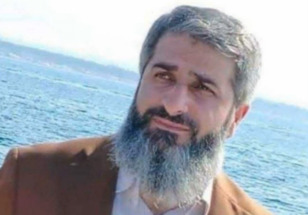
Sources told *Al Arabiya* that the co-pilot of Flydubai flight FZ1073, bound from Dubai to Tel Aviv, had spent extended periods outside Oman, particularly in Syria, where he was reportedly influenced by extremist ideology.
The sources added that the co-pilot, identified as Humam Al-Hamami, left Oman after authorities there barred him from working as a pilot, and later moved to the UAE.
The flight became an emergency after the co-pilot allegedly stabbed the Indian captain, according to information circulating about the incident. Flight-tracking data showed the aircraft first squawked code 7700, indicating a general emergency, then code 7500, which signals unlawful interference or a possible hijacking, before returning to code 7700.
The data also recorded changes in the aircraft’s altitude and route. The Boeing 737 MAX 8 landed safely at Prince Sultan bin Abdulaziz International Airport in Tabuk after being diverted. Reports indicated that the passengers were unharmed.
The Emirates News Agency reported that the UAE Attorney General had ordered the formation of a team of prosecutors to investigate the incident. A correspondent for *Al Arabiya* and *Al Hadath* also reported that Saudi authorities were continuing their investigation and that the aircraft remained at Tabuk Airport. The passengers, the correspondent said, were assisted in accordance with international protocols.
Saudi pilot Captain Issam Al-Saadawi said cockpit voice recordings could provide crucial evidence about what happened before the emergency was declared. They may help investigators establish what the pilots said, identify sounds inside the cockpit and reconstruct the sequence of events before the flight was diverted.
He also stressed the importance of reviewing the crew’s communications with air traffic control. These could help determine who made the distress call, what emergency was reported and what information the crew relayed before landing. If one pilot was injured and the other was able to communicate, the recordings may clarify what was said to air traffic control and what happened in those critical moments.
The flight data recorder, meanwhile, provides technical information including the aircraft’s speed, altitude, heading, the timing of the diversion and rate of descent, as well as details about the aircraft’s performance and control systems. By comparing these data with cockpit recordings, air traffic control communications and the aircraft’s technical inspection, investigators can reconstruct a timeline from the start of the emergency through the landing in Tabuk.
Al-Saadawi emphasized that photographs, videos and circulating accounts cannot replace a technical investigation or its findings in an incident of this nature.