-
From Istanbul to Pakistan: The Battle for Influence Intensifies Within the Muslim Brotherhood
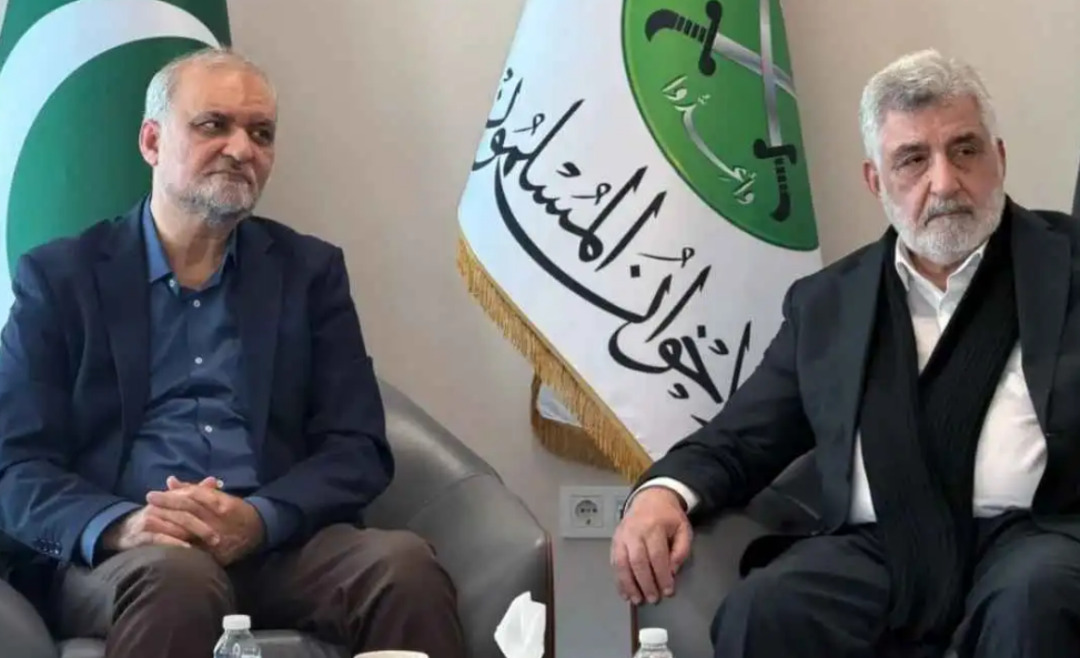
As disputes over leadership and representation deepen within Egypt’s Muslim Brotherhood, a meeting in Istanbul between the acting supreme guide of the London-aligned faction and Hafiz Naeem ur Rehman, emir of Pakistan’s Jamaat-e-Islami, has refocused attention on the rivalry between the Brotherhood’s factions and their efforts to strengthen their presence abroad.
Following a meeting held on November 2, the two sides announced plans to expand political, organizational and ideological cooperation, and to exchange expertise. The statement, however, provided no details about concrete steps or specific financial commitments.
According to a European source who monitors Islamist groups and their transnational networks, the significance of the meeting lies not only in its substance, but also in the identity of the Egyptian participant and the timing. The gathering comes amid an ongoing dispute between Abdel Haq’s faction and the leadership of Mahmoud Hussein, based in Turkey, as they vie for control of institutions, foreign relations and organizational resources.
The source added that Naeem ur Rehman’s visit to Istanbul preceded his meeting with Abdel Haq. During the visit, he took part in political and intellectual events and held talks with Turkish figures. In the source’s view, this context could allow the London faction to draw on existing networks and demonstrate that it remains capable of engaging with Islamist leaders outside Egypt despite its internal divisions.
One detail that drew attention, the source said, was the way the Pakistani statement described Abdel Haq’s leadership role. The source considers this a boost to his faction’s efforts to secure external recognition of its legitimacy, while Mahmoud Hussein disputes Abdel Haq’s right to represent the Brotherhood and exercise its leadership powers.
The leadership crisis escalated after Ibrahim Munir’s death in November 2022, as rival centers of authority emerged to manage the organization. Disputes over institutions, funding, appointments and international relations have since widened. According to the source, the Istanbul meeting gives Abdel Haq an opportunity to present himself to other movements as the representative of an established leadership, despite the lack of consensus within the Brotherhood over his legitimacy.
American researcher Kyle Shideler, who specializes in Brotherhood networks, sees the meeting as a reflection of the Egyptian organization’s crisis more than evidence of its ability to expand. Speaking to *Erem News*, he said rival leaders are seeking foreign ties to compensate for declining internal cohesion. The meeting gives Abdel Haq’s faction a chance to project a political presence beyond the internal disputes, Shideler said, but also underscores the difficulty of resolving the leadership question and managing a unified international network.
The Pakistani statement refers to exchanging expertise in organizational development, political work and ideological training—areas connected to managing cadres, sustaining institutions and mobilizing supporters. In this context, the European source said Jamaat-e-Islami’s long experience in political participation and institutional work could be valuable to a faction seeking to address its internal challenges and reorganize its ranks.
Any future cooperation remains a subject of interest, particularly if it develops beyond political contacts into ongoing partnerships involving educational or media institutions, associations, or platforms for exchanging expertise. Shideler said the key question is whether the meeting will lead to structured cooperation, which entities would be involved, and how responsibilities and funding would be managed.
Istanbul also holds particular significance as a base for figures and institutions associated with rival factions, and as a venue for meetings between leaders of Islamist movements from several countries. With political and civil-society activities increasingly crossing borders, the source stressed the importance of tracking links between participating institutions and the bodies overseeing them to better understand the nature of their activities and their organizational and financial responsibilities.