-
Report: A Russian Operations Room in Hmeimim Monitoring Attacks by Regime Loyalists
“Al-Quds Al-Arabi” revealed audio recordings of a leader in the military uprising launched by remnants of the ousted Assad regime. In these recordings, the leader gives instructions for transferring the wounded to the Russian base in Hmeimim when necessary, admitting that the Russian forces are fully aware of the developments, indicating the presence of an operations and coordination room inside the base. The leader added that Moscow may intervene if a "military reality is imposed for 24 hours." The field operations have been led by a group of former Assad army officers, such as Brigadier General Ghiyath Dalla and Brigadier General Yasser Salhab.
In the Qadmous area, a local source informed “Al-Quds Al-Arabi” that the activity of elements from the ousted regime's intelligence has increased during February, with these elements gathering in groups of 30 to 40 members. The source explained that most of these individuals belong to security forces, such as Air Force Intelligence and Military Security, and some are known for their bad reputation. It was found that a former army officer regularly visits the area to provide them with funding and salaries.
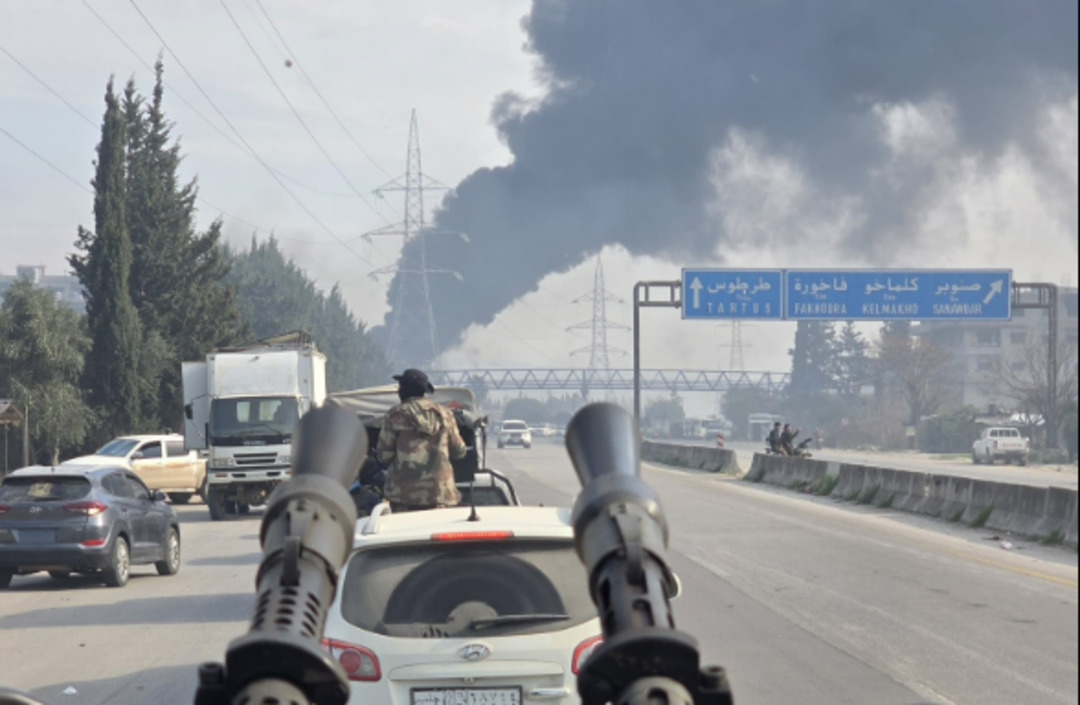
In a related context, the Syrian coast has witnessed a security escalation, with violent events reported in the Dattour neighborhood north of Latakia and in Beit Anan in the eastern countryside of Jableh. It is noteworthy that the “Military Council for the Liberation of Syria” has divided its forces into three groups, including “Al-Assad Shield,” led by Brigadier General Ghiyath Dalla, who announced the formation of the council after securing vital military bases.
On Thursday, there were attempts to take control of Qadmous, but the intervention of local residents prevented bloodshed, leading to the withdrawal of security elements. Reports confirmed that remnants of the regime were heavily armed, including heavy weaponry.
According to the Syrian Network for Human Rights, around 125 civilians have been killed by security forces in the provinces of Latakia, Tartus, and Hama, while reports indicated serious human rights violations. The Ministry of Defense has begun sending reinforcements to support security forces in the coastal provinces, according to Colonel Hussein Abdul Ghani, who emphasized the necessity of addressing the sources of gunfire.
On the international front, the UN Special Envoy, Geir Pedersen, expressed concern over recent developments and stressed the need for restraint from all parties. A group of Arab countries, including Saudi Arabia, the UAE, and Qatar, condemned the attacks on security forces and expressed solidarity with the Syrian government.
In conclusion, the new Syrian administration seems to be facing significant challenges in stabilizing the country and managing security conditions amid rising violence and chaos.