-
Al-Sharaa’s Mysterious Fund Swallows Assad-Era Assets—and Holds the Keys to Syria’s Economy
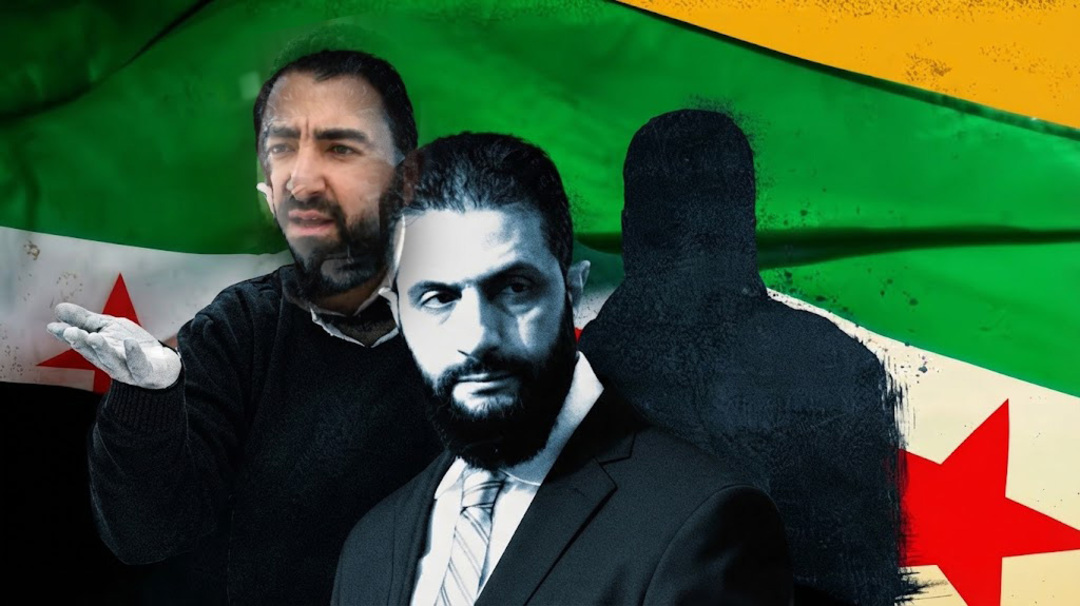
Syria’s leadership has transferred assets seized from figures linked to Bashar al-Assad’s regime into a government fund shrouded in secrecy, which is rapidly expanding across broad swathes of the economy. While officials present it as a means of protecting state property and attracting investment, analysts and businesspeople warn that it has become an extraordinary center of financial and economic power—without disclosing its assets, accounts or management to the public.
The “Syrian Sovereign Fund” was established by a decree issued by President Ahmed al-Sharaa last year. Since then, its control has extended over a network of assets that includes state property and companies seized from businesspeople linked to the former regime, according to businesspeople and officials familiar with the matter.
The finance minister valued the fund’s assets at around $50 billion last year, but provided no details about its holdings, financial position or the identity of its director. Its investments include factories, shopping centers, real estate and stakes in banks. The fund says its activities provide jobs for more than 40,000 people.
As al-Sharaa’s government seeks to attract Gulf capital, the fund has quickly become a central player in investment deals and a powerful force in Syria’s economy, according to analysts and businesspeople. Its vast holdings give it influence across multiple sectors, while its officials help determine which entities manage and invest in key industries.
Thaer Lahham, director general of the Syrian Business Council, said the fund was “the most influential and currently the wealthiest entity in Syria’s economy.” A businessperson who deals with the fund described it as part of the country’s governing structure, saying: “What is the state today? It is the ministries and the fund.”
The tourism minister chairs the fund’s board, and the fund reports directly to the presidency. Its director is Ibrahim Sukkarieh, a Lebanese-Australian national, according to three people who have met him. His name does not appear on the fund’s website. He is subject to Australian sanctions over allegations that he joined an organization affiliated with al-Qaeda, which predated Hayat Tahrir al-Sham, the armed group led by al-Sharaa that ultimately ousted Assad.
The fund, which says it has more than 270 employees, declined to answer the Financial Times’ questions about its assets, revenues, management and transparency. It said only that it was “a newly established institution still in its formative stage,” gradually building its governance framework and seeking to align its work with international practices followed by sovereign wealth funds.
The fund says its mission is to “protect and develop assets owned by the Syrian state” and establish “strategic partnerships that bring capital, technology and expertise to Syria.” But its expanding role, alongside the limited information available about how it is managed, raises questions about who oversees its assets and decisions.
### Major deals and growing influence
The fund has emerged as a major player in real estate through a subsidiary headed by Mohammad al-Khayyat, a member of a wealthy Syrian-Qatari family. The family has worked closely with the Trump family and the White House, and has signed major infrastructure and energy agreements with the Syrian government.
Foreign investors have moved into projects linked to the fund. They include a $7 billion real-estate project with Emirati developer Arada, as well as agreements with Turkish supply-chain company Tiryaki Agro and Saudi Arabia’s Riyadh Cables Group to develop and manage the fund’s assets.
The fund has also acquired a 25 percent stake in a Syrian entity established by Kuwaiti telecommunications company Zain, after the entity received a $747 million license to operate a mobile-phone network. The fund has also established new companies, including a payments firm working with Visa in Syria and a local car manufacturer.
Arada, Zain and Riyadh Cables did not respond to requests for comment. Al-Khayyat also did not respond to a request sent through his company. The newspaper was unable to reach Sukkarieh, who did not answer questions sent through the fund.
Jihad Yazigi, editor-in-chief of the Syria Report website, said the lack of transparency undermines trust “between citizens and the state.” He said institutions managing large sums of money without clarity about their oversight typically raise questions, noting that the fund’s chief executive has not even been officially named. However, he added that Gulf investors the government is seeking to attract may not place the same priority on transparency, and may prefer dealing with an institution that can bypass bureaucratic hurdles and procedures.
### Seized assets and disputed ownership
Public information about assets seized from Assad’s former allies remains limited. A government committee tasked with recovering illicitly acquired assets said the fund had helped manage 32 companies and institutions operating in trade, services and banking that belonged to Samer Foz, a prominent businessman during the Assad era. The assets also included a shopping center in Damascus seized from businessmen Mohammad and Waseem al-Qattan.
The United States and Europe sanctioned Foz and Waseem al-Qattan for supporting Assad. After the companies came under the fund’s management, their senior leadership was generally replaced, while lower-level employees kept their jobs, according to people familiar with the matter.
But taking control of the assets has not resolved every ownership dispute. The fund has faced difficulties changing the registered owners of some companies, while former owners have sought to reclaim their stakes and some have challenged the seizures.
In one case, the original developer of a shopping center in Damascus sought redress after the project was taken from him during the Assad era and transferred to Waseem al-Qattan, according to the Damascus governorate. The governorate said the fund reached a settlement with him.
The fund told the newspaper that “all proceeds go to the Syrian state.” Samer Foz and Waseem al-Qattan did not respond to requests for comment sent through social media or, in Foz’s case, to his publicly listed email address.
### Luxury real estate under the fund’s control
The fund has announced public-private partnerships that allow investors to operate its assets and, in some cases, develop them, while the assets remain under its control. It directly owns real estate and also manages public land belonging to government entities, according to a person familiar with its property deals.
The source added that the fund sometimes acts as an intermediary between public institutions and private developers, or represents the state in projects, in return for a share of the revenue.
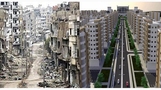
Several projects focus on luxury real estate, a sector that has received particular attention from the new government. Among the most prominent is “New Damascus,” a project the fund plans to develop with Arada. It includes 11,000 housing units on the outskirts of the old capital, along with a hospital and a school. Computer-generated designs show glass-fronted shopping centers, fountains and luxury residential amenities.
The fund is thus expanding its role in acquiring assets, managing projects and attracting investors, while details of its wealth, decisions and leadership remain out of the public’s reach.