-
Human Rights Watch: Syria’s Reconstruction Is Proceeding Without Safeguards to Protect Residents’ Rights
Human Rights Watch has warned that Syria’s reconstruction efforts are proceeding in the absence of a comprehensive legal and rights-based framework that guarantees the participation of affected communities and protects residents’ rights to housing, land, and property.
In a report published on Sunday, September 27, the organization said that the Syrian government had concluded—or was working to conclude—multibillion-dollar agreements in the reconstruction and investment sectors, while the laws governing the process still lacked clear safeguards concerning consultation, compensation, and the right to challenge decisions affecting homes and land.
Human Rights Watch called on the government, donors, and investors to ensure that reconstruction projects serve local communities and include transparent mechanisms for consulting residents, particularly displaced people. It also urged the adoption of fair compensation procedures and measures enabling those affected to challenge relevant decisions.
### Concerns That Reconstruction Could Come at Residents’ Expense
In March 2026, the Syrian government unveiled a national recovery plan, followed by international pledges worth billions of dollars for aid, financing, and investment. However, the organization said that existing laws do not require the government or developers to involve affected communities before projects are approved or presented to investors.
The organization maintains that compensation should be determined through negotiations with rights holders rather than imposed upon them. It also stressed the need to establish an independent mechanism allowing residents to object to decisions concerning their homes and land.
Hiba Zayadin, Human Rights Watch’s senior Middle East adviser, said that Syria’s reconstruction was progressing slowly but could result in widespread violations of Syrians’ rights if it continued without a clear rights-based framework.
She added that the legal framework currently being developed would ultimately determine how homes are rebuilt, which rights are recognized, and whose claims are heard during the process.
For its report, the organization reviewed Syrian government data and documents, including statements by President Ahmad al-Sharaa concerning reconstruction and the constitutional declaration issued in March 2025. It also examined reports by the World Bank, the International Rescue Committee, the International Organization for Migration, the United Nations High Commissioner for Refugees, and the United Nations Office for the Coordination of Humanitarian Affairs.
### Returning to Areas Lacking Essential Services
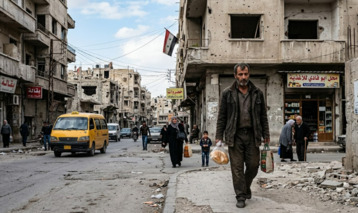
According to the report, Syrians are returning to areas that, in some cases, lack housing and basic services, while housing, land, and property issues—some of which date back to the previous government—remain unresolved.
The organization noted that reconstruction projects are being launched in some areas without sufficient participation from affected residents, even as the cost of rebuilding the country is estimated at enormous levels. In October 2025, the World Bank estimated the value of material damage at approximately $108 billion, while placing reconstruction costs between $140 billion and $345 billion, with an average estimate of around $216 billion.
As part of its efforts to attract investment, the Syrian government moved to encourage foreign capital amid the restoration of diplomatic relations and the lifting of sanctions imposed on Syria by the United States and European countries, according to the report.
Saudi Arabia pledged $6.4 billion in investments across the real estate, infrastructure, telecommunications, and energy sectors, while Qatar committed $4 billion. Dubai-based DP World also secured a 30-year concession to operate the Port of Tartus.
The World Bank additionally approved grant-funded projects worth more than $1 billion, while the International Monetary Fund launched a technical cooperation program with Damascus. The European Union pledged €620 million—equivalent to approximately $713 million—for humanitarian assistance and social and economic recovery during 2026 and 2027.
However, the organization said that the value of announced pledges far exceeded the volume of investments actually implemented, noting that the disbursement of large sums by international donors depends on the existence of clear governance and legal frameworks.
### An Incomplete Return and Unresolved Property Rights
The report cited a study by the International Rescue Committee, published in July 2026, which found that more than 3.5 million Syrian refugees and internally displaced people had returned to their areas of origin since December 2024. However, Human Rights Watch said that returns had not been entirely voluntary in all cases.
According to the organization, some Syrians returned because of deteriorating conditions in displacement, the suspension of aid, their precarious legal status, and rising rental costs in their former or temporary places of residence.
Human Rights Watch emphasized that, under the International Covenant on Economic, Social and Cultural Rights, Syria is obligated to guarantee the right to adequate housing, including security of tenure, access to basic services, and a suitable location.
The International Covenant on Civil and Political Rights also guarantees the right to an effective remedy. Human rights obligations further include non-discrimination on the basis of race or religion, as well as access to water, sanitation, electricity, healthcare, education, food, and social security.
The organization called on the Syrian government to treat the restoration of public services in areas of return as an immediate human rights obligation rather than a step postponed until a later stage of reconstruction.
### Judicial Obstacles and Fears of Repeating Past Experiences
The report noted that, in theory, affected residents can resort to Syrian courts to resolve individual disputes. However, limited judicial resources and the difficulty of proving ownership constitute obstacles for many people with property claims.
According to the organization, there is also no independent and specialized grievance mechanism enabling residents to challenge large-scale reconstruction decisions.
In Damascus, Decree No. 66, issued in 2012, was used to implement urban development projects that, according to the report, displaced thousands of residents without adequate legal procedures or appropriate compensation. The governor of Damascus suspended implementation of the decree in October 2025 pending a legal review, but no presidential decree definitively settling its legal status has been issued to date.
Law No. 10 of 2018 expanded the model established by Decree No. 66 to other areas of Syria and required residents to prove ownership within specified time limits. The organization said this had disproportionately harmed displaced people, who face difficulties accessing official documents and government offices.
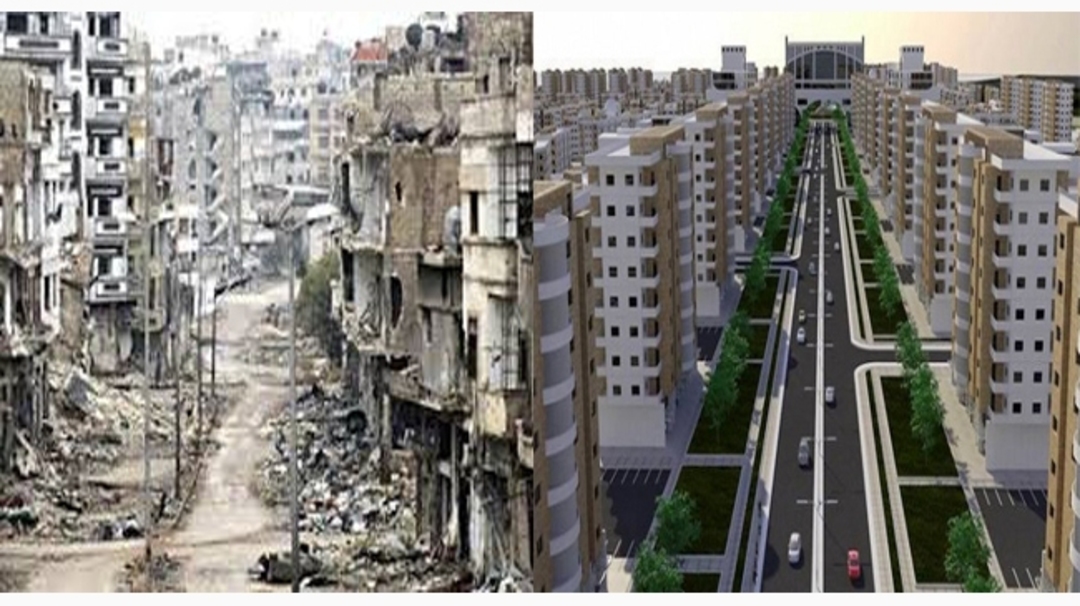
The report also examined the **Marota City** and **Basiliya City** projects in Damascus, which are managed by **Damascus Cham Holding**, arguing that their continued promotion for investment raises questions concerning property rights and compensation mechanisms.
A presidential committee was formed in December 2025 to review procedures related to Decree No. 66, while some compensation decisions were issued in May 2026. However, according to the report, the legal framework governing the two projects remains unresolved.
In the Jobar district, where approximately 95 percent of buildings were destroyed, residents were reportedly informed that they could not rebuild individually. One reconstruction proposal would grant homeowners new units equivalent to 50 percent of the floor area of their previous homes. Residents of informal settlements would receive units equivalent to 30 percent of the area of their land, while the proposal contains no compensation for tenants.
### Calls for Public Participation and for Linking Reconstruction to Transitional Justice
Human Rights Watch said that international law requires affected communities to play a meaningful role in decisions concerning their homes, land, and neighborhoods before such decisions are adopted. This includes involving displaced people in planning their return and reintegration.
The organization referred to a study by the Arab Reform Initiative, based on 45 interviews conducted between July 2024 and May 2026, which concluded that reconstruction decisions had, in some cases, been made without community participation, clear compensation standards, or accessible grievance mechanisms.
The organization recommended that the Syrian government:
- Ensure the implementation of economic, social, and cultural rights throughout all stages of reconstruction.
- Require government bodies to consult affected communities before approving projects or presenting them to investors.
- Prioritize the restitution of property and enable displaced people to return.
- Establish clear and fair criteria for determining compensation.
- Temporarily halt demolitions in cases where property and compensation arrangements have not been resolved.
- Repeal Decree No. 66 and Law No. 10 of 2018, or subject them to an independent review.
- Establish independent and effective grievance mechanisms.
- Link reconstruction to a transitional justice process addressing housing, land, and property issues.
- Prioritize the restoration of essential services in areas of return.
The organization also called on donors and investors to make respect for human rights a condition for financing reconstruction projects, conduct prior assessments of projects’ impact on residents, ensure consultation with affected communities, and provide clear mechanisms for submitting complaints.
It urged international financial institutions to incorporate human rights assessments and safeguards concerning housing, land, and property into their financing and technical assistance programs. It also called on companies to conduct human rights due diligence before signing reconstruction agreements and to refrain from entering into deals involving land and property until mechanisms are established to resolve the claims of affected residents.
Zayadin concluded by saying that the legal frameworks governing Syria’s reconstruction were still being drafted. She considered this an opportunity to build meaningful safeguards to protect affected communities, stressing that the success of sustainable recovery would depend on how these frameworks were designed and implemented.