-
Damascus Ranks Last in 2026 Liveability Index, Facing Crisis of Stability and Services
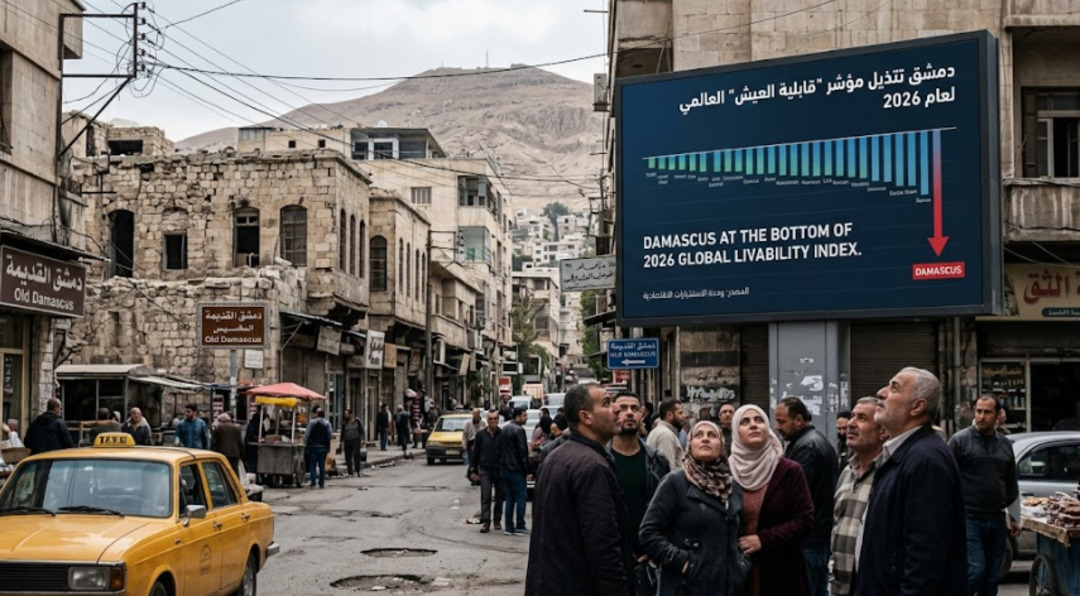
Damascus placed last (173 out of 173) in the Economist Intelligence Unit’s 2026 Global Liveability Index, scoring just 32 out of 100, reflecting the repercussions of a brutal conflict spanning roughly a decade and a half on its institutions, infrastructure, services, economy, daily life, and its role as a capital in relation to internal regions and the wider regional and global context.
The study evaluated five main domains: stability, health care, education, infrastructure, and culture & environment. The detailed scores were: stability 20, health care 32, education 41, infrastructure 32, and culture & environment 33 — results that show Damascus failed to achieve more than about one-third of the maximum in most areas.
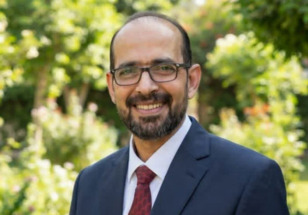
Political analyst Majd Turkawi said the most dangerous aspect is the low stability score — only 20 points — which he argued is not merely a political issue since active battles have ended and the country has transitioned from one rule to another. The measurement instead reflects social discord, lack of acceptance of others, very high crime rates, internal conflicts among local components, senseless disturbances, rising security threats, and the partial inability of official institutions to impose comprehensive public order. He added that this is seen in the uncontrolled spread of weapons and security fragility on the periphery (east, north, south and west), and that Damascus, like other Syrian cities, needs to restore daily balance for residents to live under stable conditions. The transitional phase has so far failed to overcome the past’s effects, and in some places the situation has worsened due to factional and tribal dynamics and unchecked extremist and hateful rhetoric unprecedented in modern Syrian history.
Although Damascus scored relatively higher in education, this does not mean the sector is healthy — only that it is marginally better than others. Education maintained its institutional presence during and after the war, but its quality has declined significantly compared with the pre-2011 period. Large numbers of teachers emigrated during Syria’s major migration waves in the war, a drain that affected all sectors before and after the fall of the previous regime. The causes vary, but the country alone bears the damage in their absence.
“Sectarianism has reached the schools,” said Ahmed Kartouti, headmaster of a Damascus school. He added: “If Damascus is last, what about Homs? It will surely rank near the bottom given reports from there. Education cannot be good in one place and bad in another because it is an integrated process. We hear shocking things in many schools in Damascus and elsewhere: arrogance, obscene language, threats, sectarian labeling, and much more. For many years Syria lacked a unified scientific curriculum; each area taught in its own way. The absence of centralization was a heavy burden. Giving Damascus 41 points in education seems logical because other cities would not score more than 10 or 20 at most.”
The low ranking for Damascus in the index reflects the combined effects of conflict, institutional fragmentation, and social and security fragility, calling for urgent, comprehensive policies to reform institutions, restore community security, and improve basic services.