-
EU Report: Syria at a Critical Crossroads Amid Escalating Violence and Declining Freedoms
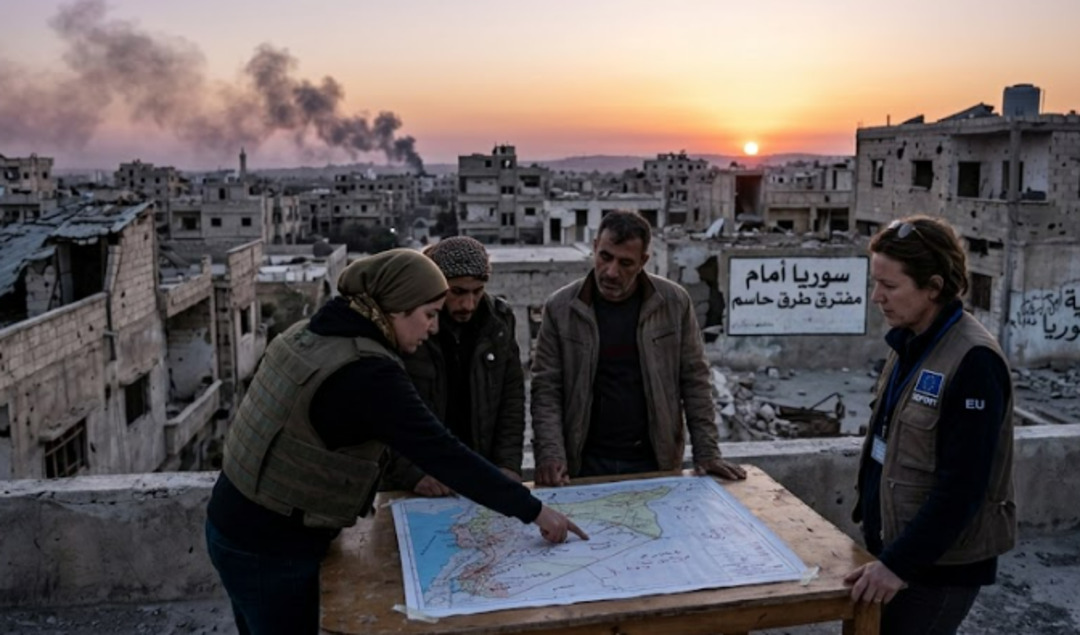
The European Union’s annual report on human rights and democracy in Syria, issued in August 2026, stated that the country entered a critical phase following the fall of Bashar al-Assad’s regime in December 2024. During this period, hopes for a political transition became intertwined with profound security, economic, humanitarian, and social challenges.
The report noted that 2025 witnessed significant difficulties for the transitional government in maintaining security and protecting civilians, amid delays in the transitional justice process and deteriorating economic and humanitarian conditions.
### More Than 3,000 Victims of Sectarian Violence
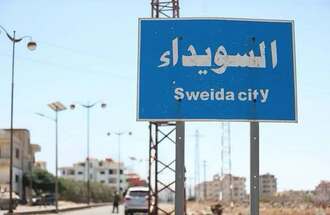
According to the report, several parts of the country experienced repeated outbreaks of sectarian violence. The most serious incidents occurred in the coastal region in March, where approximately 1,400 people were killed, as well as around Damascus in May and in Suwayda province in July, where more than 1,700 victims were recorded.
The report also referred to the attack on the Mar Elias Church in Damascus in June, in addition to continued attacks by ISIS in various parts of the country.
It stated that forces affiliated with the transitional government committed widespread human rights violations in coastal and southern areas. The report noted that the United Nations Independent International Commission of Inquiry, after gaining access to Syrian territory, documented these violations in a report issued in August, indicating that some of the acts may amount to war crimes.
The report added that the Syrian authorities had established national investigative committees to examine the events in the coastal region and Suwayda. At the same time, the European Union stressed the need to ensure that investigations are independent, transparent, and lead to accountability for those responsible for the violations.
### Declining Freedoms and Continued Hate Speech
The report recorded only very limited progress in the Press Freedom Index, with Syria ranking 177th out of 180 countries. Civic space also remained classified as “closed,” amid continued restrictions on civil and media activities.
The European Union noted that local media outlets face limited capacity and resources, as well as financial pressures and a growing tendency to avoid criticizing the authorities. The report also warned of the continued spread of online hate speech, including speech targeting women.
In the Corruption Perceptions Index, Syria ranked 172nd out of 182 countries, according to the report.
### Economic Sanctions Lifted and New Sanctions Imposed
The report stated that the European Union had based its Syria policy on the EU Action Plan on Human Rights and Democracy and on the Council of the European Union’s conclusions on Syria, issued in June 2025.
The EU reaffirmed its support for an inclusive and peaceful political transition that respects the rights of all Syrians without discrimination. Its efforts focused on political and social inclusion, accountability, combating hate speech, promoting women’s rights, and reintegrating displaced people and refugees into their areas of origin.
The European Union lifted economic sanctions on Syria in May to support economic recovery. At the same time, it added new names to its sanctions lists under the European Union’s Global Human Rights Sanctions Regime over violations committed after Assad’s fall, particularly in the coastal region and Suwayda.
### Recommendations to Strengthen the Transition and Accountability
The report called for an inclusive and peaceful political transition and for all Syrian communities to be represented in public and political life. It also urged the authorities to address the underrepresentation of women and non-Sunni Arab communities in state institutions.
It further recommended strengthening transitional justice and accountability for serious violations and supporting the two national commissions on transitional justice and missing persons, which were established in May 2025.
The report stressed the need for independent and transparent investigations into sectarian violence, particularly in the coastal region, Suwayda, and the areas surrounding Damascus, as well as the prosecution of those responsible. It also called for the protection of civilians and respect for international humanitarian law and international human rights law.
The European Union also urged Syria to combat hate speech and disinformation, promote women’s rights, and ensure that refugees and internally displaced people can return to their areas of origin in a safe, voluntary, and dignified manner.
On the political and institutional fronts, the report recommended adopting new legislation to enable inclusive elections, completing implementation of the March 10, 2025 agreement with the Syrian Democratic Forces in northeastern Syria, and addressing the special situation in Suwayda province.
The report emphasized that these recommendations are based on the Council of the European Union’s conclusions on Syria and the European Action Plan on Human Rights and Democracy for 2020–2027. They reflect the EU’s continued support for Syria’s political transition, with a strong emphasis on inclusiveness, accountability, and the protection of human rights.