-
Opening of a Turkish School in Damascus Sparks Debate over Influence and Military Presence
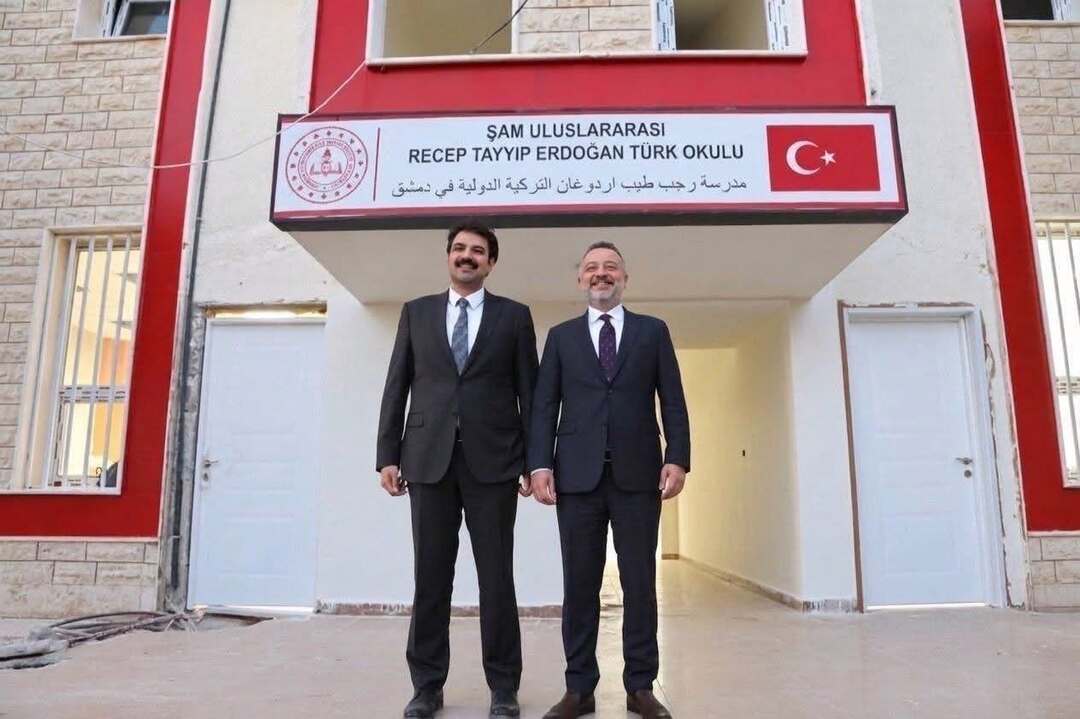
The opening of the “Recep Tayyip Erdoğan Turkish International School” in the Syrian capital by Turkey’s ambassador to Damascus, Nuh Yılmaz, has sparked wide political and public debate amid the continued presence of Turkish forces in parts of Syria and growing discussion over the nature of relations between Damascus and Ankara.
The Turkish side presented the school’s opening as a step aimed at strengthening educational and cultural cooperation between the two countries, promoting academic exchange, and providing educational opportunities for students. However, the move has drawn questions and criticism from Syrians who view it as a sign of Turkey’s expanding presence in the country, particularly as the issue of Turkish forces and the areas under Ankara’s influence remains politically and publicly contentious.
Critics argue that naming an educational institution in the Syrian capital after Turkish President Recep Tayyip Erdoğan goes beyond the educational dimension and carries a political and symbolic message. They maintain that education should not be used as a tool to consolidate foreign influence or portray a controversial military presence as normal cooperation between two states.
The school’s opening comes at a sensitive time, as many Syrians draw a connection between the visible Turkish presence in civilian institutions and sectors and the continued deployment of Turkish forces inside Syria. This has raised questions about whether such steps are compatible with national sovereignty and whether Damascus views the Turkish presence as a temporary partnership or as an expanding influence being entrenched through cultural and educational channels.
Supporters of the move, however, describe the school as part of bilateral relations that extend beyond political disputes. They argue that educational cooperation could support students, improve curricula, and facilitate the exchange of expertise. They also believe that educational institutions should not be held hostage to political tensions and that communication between the Syrian and Turkish peoples can continue despite unresolved issues.
This argument has done little to ease public anger among sections of Syrian society that believe any official or public celebration of Turkey’s presence in Damascus should be preceded by clarification regarding the future of Turkish forces, guarantees that Syrian sovereignty will be respected, and a clear definition of the nature, scope, and duration of Turkey’s role.
The school’s opening has brought back a broader question concerning the tools of foreign influence in Syria: Is such influence limited to military deployment, or does it also extend to education, culture, media, and the economy? It has also renewed debate over the ability of Syrian institutions to manage international cooperation in a way that preserves the independence of national decision-making and prevents civilian partnerships from becoming a cover for long-term political influence.
While Ankara describes the move as an expression of cooperation between the two countries, critics view it as an attempt to normalize a Turkish presence that remains contested. They argue that easing public anger requires greater transparency regarding the school’s objectives, its supervising authority, its curriculum, and the students it is intended to serve, in addition to a clear position on the issue of the Turkish military presence.
Against this backdrop, the school has become more than an educational project. It has turned into a new focal point for debate over sovereignty, occupation, and foreign influence, as well as an indication that every Turkish step in Damascus will remain subject to a broader question: Does it represent equal cooperation between two states, or is it an extension of a military and political influence whose future has yet to be resolved?