-
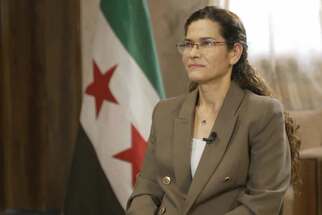
Safa al-Turki: The Exclusion of Women from Decision-Making Positions Reveals a Structural Flaw in the Balance of Power

Syrian activist Safa Abd al-Turki said that women’s limited presence in decision-making positions is about more than numerical representation; it also reveals the nature of power and how state institutions are formed.
Turki explained that calling for women’s participation does not simply mean adding seats for women or replacing men with women. Rather, it is about ensuring that half of society is represented fairly within decision-making institutions. She noted that Syrian women were active in public life throughout the years of the revolution, taking on humanitarian, community, media, human rights and political roles. They also managed their families’ affairs amid displacement and loss, documented violations, and campaigned for the rights of detainees and the missing.
Commenting on an indicator showing that women make up no more than 5.56% of those in decision-making positions, Turki said there is a clear gap between women’s roles in society and their opportunities to participate in decision-making. The issue, she added, is not whether women are capable of taking on responsibility, but the lack of pathways for turning their accumulated experience into meaningful political and institutional participation.
Drawing on her own experience as a journalist, civil society activist and former detainee, Turki stressed that issues such as detainees and missing persons, transitional justice and victims’ rights—as well as education, poverty, displacement and the protection of women—are closely connected to matters that Syrian women have experienced firsthand and developed direct expertise in addressing.
She emphasized that representation must reflect the diversity of Syrian women, including their different regions, backgrounds and experiences. She warned against limiting participation to a centralized perspective focused only on Damascus and major cities.
Turki also described a women’s quota as a transitional measure to address unequal representation, not a limit on women’s ambitions. Requiring women to reach decision-making positions solely through competition, she said, ignores the unequal opportunities they face from the outset.
She added that a quota is neither a privilege nor a reward, but a political and legal tool that enables women to enter institutions, gain experience and strengthen their presence within them—provided it is implemented in a way that fulfills its purpose.