-
Continued Torture in Syrian Detention Centers
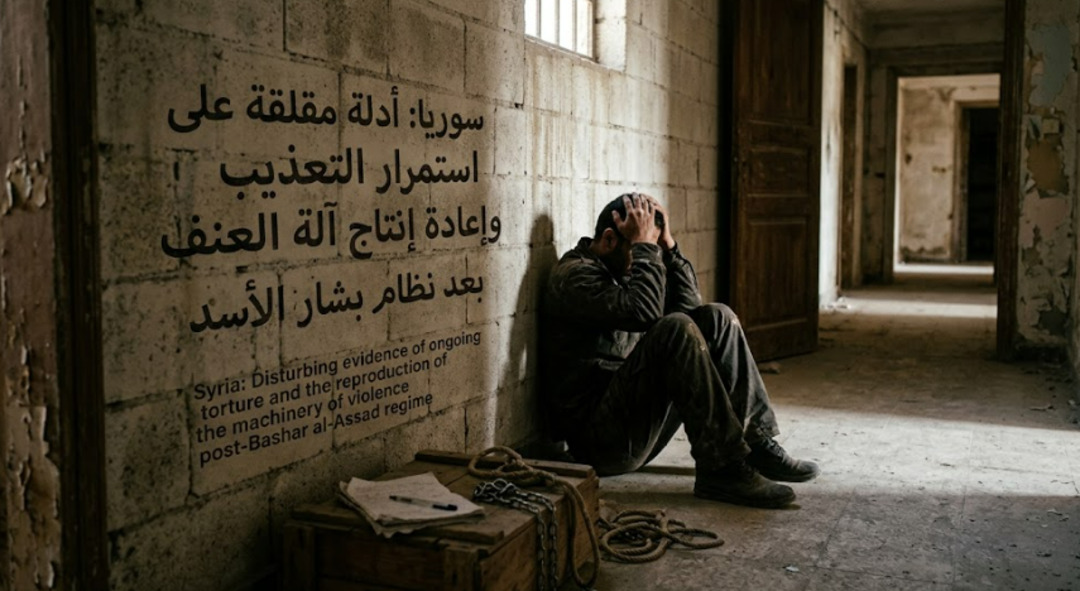
The organization "Syrians for Truth and Justice" revealed, in an investigative report, that torture and ill-treatment continue in Syria, despite the passage of more than a year and a half since the fall of the Assad regime and the opening of prisons and detention centers long associated with violations and enforced disappearances.
The investigation was based on "19 testimonies" from survivors of detention and torture, relatives of people who died or whose whereabouts became unknown while in custody, and eyewitnesses. It also drew on official data, human rights and media reports, and material published in open sources. The organization documented "14 cases" in which individuals were subjected to torture or died in detention between June 2025 and June 2026, while stressing that these cases do not constitute a comprehensive record of all violations during that period.
According to the testimonies, abuses began in some cases from the moment of arrest at checkpoints or on the streets, before detainees were informed of the reasons for their arrest or formally charged. Some were reportedly transferred blindfolded and with their hands bound between multiple detention facilities, without their arrests being properly recorded or their families being informed of their whereabouts.
Survivors described being beaten with fists, feet, sticks, cables, plastic pipes, and rifle butts. They also reported electric shocks, threats of killing or execution, mock executions, partial stripping, and being forced into humiliating positions. The investigation further documented threats of rape, unwanted touching and sexual assault, as well as sexually explicit insults. In some cases, wives and children were used as means of pressuring detainees.
The testimonies indicated that sectarian, ethnic, and political identity—as well as a person’s region of origin, previous employment or military service, and the contents of their mobile phones—were used as grounds for suspicion and punishment. Such treatment was accompanied by discriminatory insults during beatings and interrogations.
The violations were not limited to direct physical violence. Detainees described harsh conditions in overcrowded cells lacking adequate ventilation and hygiene, along with insufficient food, water, washing facilities, and medical care. The organization said these conditions caused or contributed to serious illnesses in some cases. Other survivors were released with physical injuries and psychological trauma, while their families bore the costs of searching for them and providing medical treatment.
The investigation also addressed deaths that occurred inside detention centers operated by different parties. In some cases, families were told that the deaths resulted from medical conditions, while others said they had observed injuries or marks on the bodies that could indicate violence. The organization stressed that, in the absence of independent medical reports or publicly disclosed investigations, it is not possible to determine the medical cause of death in every case. However, deaths in custody require immediate, independent, and transparent investigations.
Syrians for Truth and Justice concluded that the violations do not appear to be linked to a single detention apparatus or centralized chain of command. Instead, they occur within multiple structures, including security and police agencies, military formations, armed factions, local forces, and temporary or undisclosed facilities. Despite the diversity of actors, similar patterns have been repeated, including beatings during arrest, torture during interrogation, incommunicado detention, and the denial of access to lawyers and judicial oversight.
The organization said that the multiplicity of detention authorities and facilities, along with undisclosed transfers, has made it difficult to establish responsibility. This has occurred amid the absence of unified records, handover logs, and independent medical examinations documenting detainees’ conditions at every stage.
Syrians for Truth and Justice called for all detention authorities to be placed under unified rules and independent oversight. It also urged guarantees that detainees have access, from the moment of arrest, to their families, lawyers, courts, and medical professionals. The organization further called for accountability for both direct perpetrators and senior officials, as well as truth, justice, and reparations for survivors and the families of those who died.
It stressed that announcing investigations—without publishing their findings or ensuring their independence and the participation of families—is not sufficient to demonstrate accountability. The organization warned against reducing the violations to isolated individual abuses or limiting accountability to crimes committed by the former regime while failing to investigate violations committed by current authorities.
*The information presented in the investigation consists of testimonies and human rights allegations that require independent and transparent official investigations. The individuals and authorities concerned should be given the opportunity to respond.*