-
Families of Syrian Detainees in Iraqi Prisons Stage Protest Outside Damascus Palace of Justice Demanding Information on Their Sons’ Fate
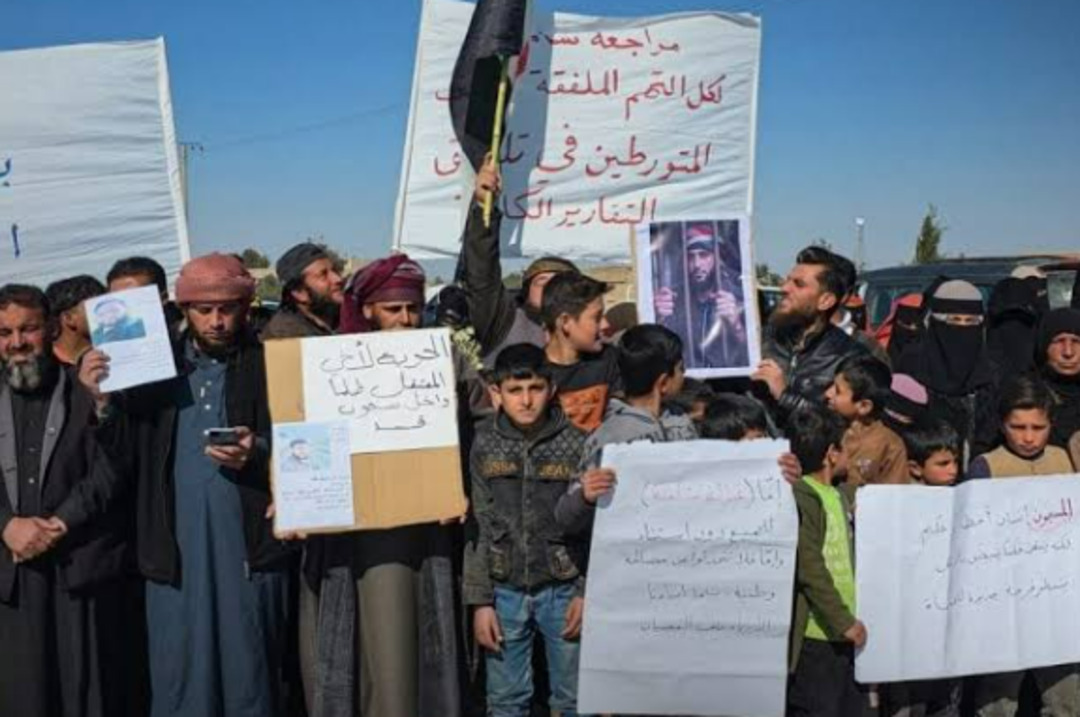
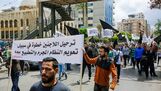
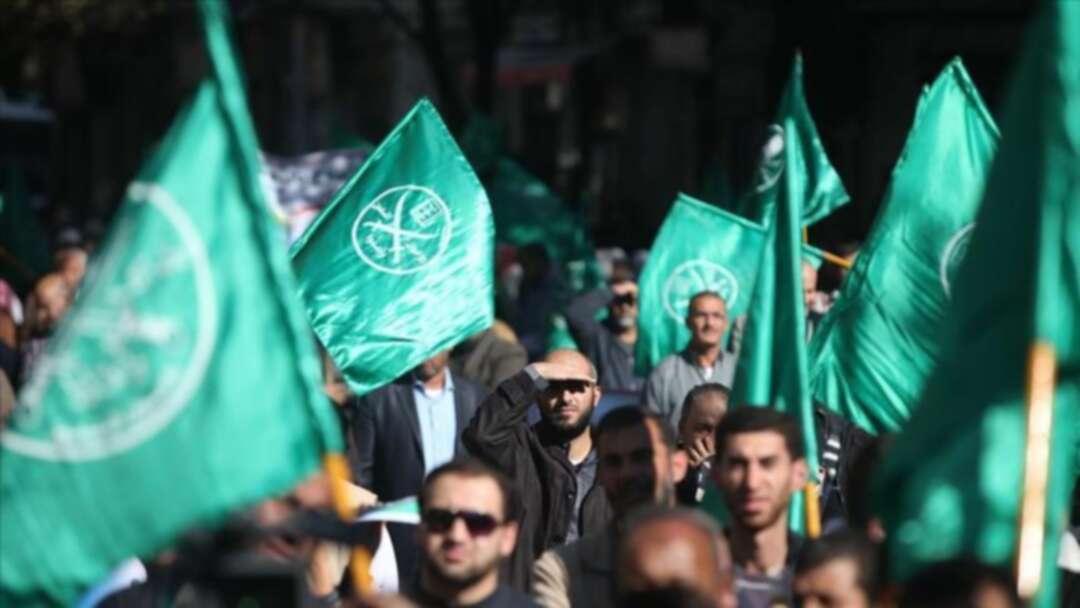
The families of Syrian detainees held in Iraqi prisons staged a protest today outside the Palace of Justice in the Mezzeh area of Damascus, calling on the Minister of Justice to meet them, listen to their demands, reveal the fate of their sons, and allow communication with them.
Participants in the protest said their sons had been transferred from areas in northeastern Syria to Iraq in recent months, as part of transfer operations announced by the United States and Iraqi authorities, stressing that they want to know where they are being held and which authorities are handling their legal cases.
The United States began, on January 21, 2026, transferring detainees accused of belonging to the Islamic State group from detention facilities in northeastern Syria to Iraq, amid the military and political developments the region has witnessed.
On February 13, Iraq’s National Center for International Judicial Cooperation announced that the number of those transferred from Syrian prisons had reached 5,704 defendants from 61 countries, including 3,543 Syrians and 467 Iraqis, in addition to 983 non-Arab foreigners, while the number of Arab detainees from various nationalities stood at 4,253.
According to the Iraqi announcement, the Al-Karkh First Investigative Court, which handles terrorism cases, began questioning the detainees immediately upon their arrival in Iraq, while the U.S. Central Command, known as CENTCOM, announced the completion of the transfer of more than 5,700 detainees from detention facilities in Syria to Iraq.
Iraqi authorities say the transferred individuals are accused of belonging to the Islamic State group, which places them before Iraqi judicial procedures. However, the families of a number of the Syrians transferred say their sons were not members of the group, and that some arrests were made arbitrarily or based on suspicions that were never subjected to clear judicial procedures.
A portion of these protests and demands has centered in areas of rural Hasakah, especially al-Hol and Tal Brak, where the past period has seen demonstrations and sit-ins by families of detainees, who have called for disclosure of their sons’ fate, identification of their whereabouts, permission to communicate with them, and their return to Syria.
The families stress that their case is not only about the place of detention, but also about the nature of the charges brought against their sons, the authority that should try them, and whether proper guarantees of defense and fair trial are in place.