-
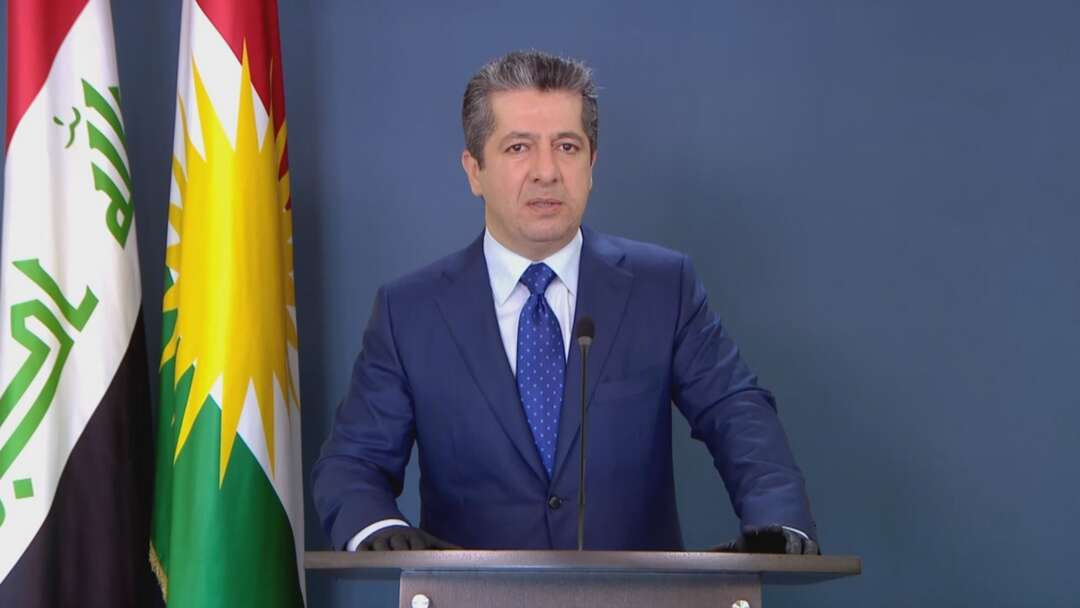
Masrour Barzani in Shams TV Interview: Federalism and Institutional Legitimacy at the Heart of Erbil–Baghdad Relations and Kurdistan’s Future

Yesterday, I watched the exclusive interview conducted by Elie Nakouzi, Director General of Shams TV, with Kurdistan Regional Government Prime Minister Masrour Barzani. The interview came at one of the most sensitive and exceptional moments for the region, including the Kurdistan Region and Iraq.
Throughout the conversation, the Prime Minister addressed a range of interconnected political, constitutional, and security issues, offering a comprehensive account of how safeguarding Kurdistan’s achievements, preserving the legitimacy of its institutions, respecting and fully implementing the federal system, consolidating stability, and confronting security challenges are intrinsically linked.
His remarks formed part of a broader vision for relations between Erbil and Baghdad, grounded in the conviction that Iraq’s stability depends on adherence to the Constitution as a framework for partnership and the distribution of powers, rather than treating it merely as a legal reference to be applied selectively, as has continued to be the case.
As has long been characteristic of Masrour Barzani’s political discourse, developments and transformations within the Kurdistan Region remain a central concern. These developments shape the foundations of stability, development, and prosperity that his government seeks to establish.
In this context, the Prime Minister presented the reactivation of the Kurdistan Parliament, following two years of enforced inactivity, as a fundamental step toward safeguarding institutional legitimacy and restoring the democratic process. The Kurdistan Region has consistently attached considerable importance to this process in its institutional, political, and social life, particularly when compared with many systems of governance across the Middle East.
This emphasis was reflected in one of the central arguments of his interview: political legitimacy derives not solely from agreements among political forces, but from election results and the will of voters.
Against this backdrop, Barzani firmly rejected the obstruction of institutions, particularly legislative bodies, regardless of the reasons invoked, including disagreements over government formation or the allocation of positions.
He stressed that establishing a broad-based, inclusive coalition government remains a priority, while maintaining that electoral results must provide the foundation for assigning responsibilities and building a stable government in an environment marked by persistent instability.
At the same time, he argued that a political party’s failure to achieve its anticipated electoral results cannot justify obstructing the political process. This position underscores his commitment to ensuring that the ballot box remains the principal basis for forming any government in Kurdistan.
It is within this framework that his willingness to engage in negotiations and make concessions to facilitate the formation of an inclusive government can be understood.
Indeed, Barzani’s position reflects an attempt to reconcile two fundamental principles that can sometimes come into tension in political practice: respecting the electoral mandate and broadening participation in government.
Under the approach he outlined, political consensus is necessary to facilitate effective governance, but it should neither undermine the significance of elections nor transform government formation into an exercise in redistributing positions and powers independently of electoral outcomes, public opinion, and the confidence of citizens. It is precisely that public confidence which determines each party’s standing within society.
Federalism, meanwhile, emerged as another defining theme of the Prime Minister’s remarks.
Barzani emphasized that Kurdistan’s participation in a federal Iraq was a voluntary choice made by the Region. He maintained that federalism does not, under any circumstances, amount to the partition of the state. Rather, it provides a framework for regulating relations among its constituent parts through the sharing of responsibilities and rights.
The significance of this argument extends beyond a conceptual clarification of federalism. It places relations between the Kurdistan Region and the federal government within a broader test of mutual commitment, trust, and constitutional respect.
From the Prime Minister’s perspective, the Kurdistan Region cannot be expected to fulfill its constitutional obligations while its corresponding rights are disregarded. Nor can the Constitution be treated as a collection of provisions from which certain articles are selectively invoked while others are ignored.
In this sense, the central dispute between Erbil and Baghdad, as reflected in his statements, is not over the principle of the state itself, but over the implementation of the constitutional framework upon which their partnership was established.
Within this context, Barzani explained that the Kurdistan Regional Government’s support for Prime Minister Ali al-Zaidi is inseparable from the need to respect and implement the Constitution and guarantee Kurdistan’s rights.
He thus framed relations with the federal government around an institutional standard that transcends personal considerations, making the fulfillment of constitutional obligations the foundation for continued cooperation.
On security, Masrour Barzani linked Iraq’s stability to the need to bring armed groups operating outside constitutional and legal frameworks under the authority of the law.
He reaffirmed the constitutional status of the Peshmerga forces, recalling their role in confronting the terrorist organization ISIS in cooperation with Iraqi security forces and with American support.
This approach also carries a broader constitutional dimension concerning the nature of the state and its institutions in both Kurdistan and Iraq.
Establishing a clear and consistent legal framework governing Iraq’s armed forces is not merely an organizational matter. It is an essential condition for the effective exercise of state authority and for ensuring accountability in security-related decision-making.
In this regard, Barzani stated that the Kurdistan Region had been subjected to more than 1,050 rocket and drone attacks, approximately half or more of which originated from within Iraq. He called on the federal government to prevent such attacks and hold those responsible accountable.
At the same time, he reaffirmed that Kurdistan would not become a party to any confrontation and would not allow its territory to be used against neighboring countries.
This position combines a refusal to become entangled in regional conflicts with a demand for domestic security guarantees, placing the rule of law within the framework of shared federal responsibility.
It is an approach consistent with his broader emphasis on protecting the Kurdistan Region and preserving its stability.
The interview’s political scope also extended to Syria, including Syrian Kurdistan, where the Prime Minister emphasized Kurdish rights and the principle of equality.
He highlighted the role of President Masoud Barzani in helping to avert conflict and creating opportunities for negotiations with Damascus.
The discussion also addressed the Kurdistan Region’s economic challenges, ranging from sanctions and delays in budget allocations and salary payments to the development of public services.
In this context, Barzani underscored the importance of the private sector, public trust, and transparency as essential drivers of economic development.
By Shiyar Khalil