-
Masrour Barzani: Kurdish Rights in Syria Cannot Be Denied, and Kurdistan Will Not Be Drawn Into Regional Wars

Kurdistan Region Prime Minister Masrour Barzani has stressed that Kurds in Syria deserve equal rights, justice, and full citizenship, while reaffirming that the Kurdistan Region will not become involved in regional conflicts or allow its territory to be used to launch attacks against neighboring countries.
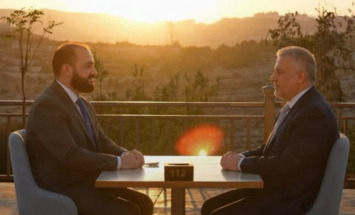
Speaking in an exclusive interview with journalist Elie Nakouzi on Shams TV, Barzani said that the Kurdistan Region does not seek to impose a particular political system on Syria, emphasizing that Syrians of all backgrounds must determine their country’s future.
He underscored that the existence and rights of Kurds in Syria cannot be denied, adding that the next phase should focus on negotiations between Kurdish representatives and Damascus to reach agreements that guarantee security, equality, and the rights of all communities.
Barzani welcomed reports that Damascus had agreed to grant citizenship to Kurds who had previously been denied it, describing the development as a positive and tangible step forward. However, he cautioned that Kurdish rights in Syria have yet to be fully secured.
He also praised President Masoud Barzani’s efforts to prevent further conflict in Syria, describing the avoidance of another war as a significant achievement amid ongoing regional instability.
Turning to regional security, the Prime Minister reiterated that the Kurdistan Region seeks peace and good relations with its neighbors and has no intention of becoming a party to military confrontations.
He revealed that the Kurdistan Region has been subjected to more than 1,050 rocket and drone attacks, stating that approximately half, or possibly more, originated from Iraqi territory.
Barzani called on the Iraqi federal government to prevent armed groups from carrying out such attacks and to ensure that all armed forces operate under the authority of the state and within the framework of the law.
Regarding Iran, he reaffirmed the Kurdistan Region’s commitment to maintaining stable and constructive relations based on mutual respect and good neighborliness.
However, he expressed regret over Iranian attacks targeting the Kurdistan Region during the war, noting that the regional authorities had requested explanations but had not received convincing responses.
On relations with Baghdad, Barzani emphasized the importance of respecting Iraq’s constitution and federal system, arguing that federalism does not mean dividing the country but rather distributing powers and responsibilities while safeguarding the rights of its different communities.
Addressing political tensions within the Kurdistan Region, he rejected the prospect of internal armed conflict, stressing that political disagreements must be resolved through dialogue rather than violence.
He also defended the reactivation of the Kurdistan Parliament and called for respect for election results, rejecting attempts to obstruct democratic institutions over disputes concerning government positions or power-sharing arrangements.
On economic development, Barzani highlighted his government’s efforts to improve infrastructure, electricity, water services, and digital governance despite financial pressures and delayed salary payments.
He stressed the importance of cooperation with the private sector in sustaining development and creating opportunities for citizens.
Concluding the interview, Barzani reaffirmed that protecting stability, improving living standards, and safeguarding the rights of the Kurdish people remain central priorities of his government.
He emphasized that the Kurdistan Region seeks constructive relations with Baghdad and neighboring countries while remaining committed to peace, development, and regional stability.