-
UN and European Reports Highlight the Decline of Freedoms and Growing Risks Facing Critics of Syria’s Transitional Government
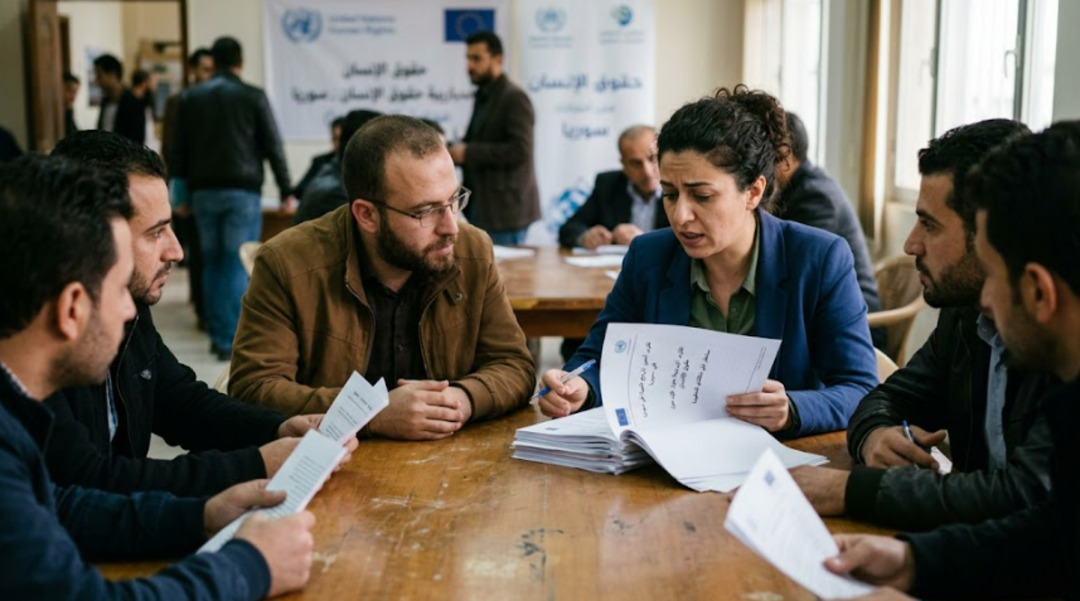
Reports attributed to the United Nations High Commissioner for Refugees (UNHCR) and the European Union Agency for Asylum (EUAA) on the security and human rights situation in Syria in 2026 have raised growing concerns about the state of public freedoms and the rights of critics, journalists, and activists.
According to the reports, critics of the transitional government, as well as journalists and activists who express opposition or criticize its policies, face risks including arbitrary detention, torture, and possibly enforced disappearance. The findings indicate that these risks may also extend to family members of opposition figures, even when the individuals concerned have not previously been actively involved in political opposition.
The reports also state that individuals who address sensitive issues, such as corruption, sectarian exclusion, or restrictions on public freedoms, may face heightened risks, including arrest.
The findings further indicate that the transitional government may view members of various Syrian communities—including Druze, Alawites, Kurds, and Christians—who do not openly support it as political opponents.
The reports also document, according to the information cited, a decline in freedom of expression following the coastal region events in March 2025 and the Sweida events in July of the same year.
According to the reports, an ideology influenced by Salafist thought and associated with the transitional government may contribute to the characterization of public criticism as “fitna,” or sedition.
The reports further indicate that some repressive legal frameworks inherited from the Assad era remain partially in force, while constitutional protections for freedoms remain limited.
They also refer to the continued monitoring of critical and opposition-related activities online through individuals believed to be working as informants for the transitional government.
These findings come amid growing political and human rights debate over the performance of the transitional government and the extent of its commitment to political inclusion, freedom of expression, and the rights of Syria’s various communities.
This wording is based on the information contained in the referenced reports. When publishing, it is advisable to include the original links, page numbers, or direct quotations to ensure accuracy and enable readers to verify the content.