-
Barrack Reveals U.S. Mediation Between the SDF and Damascus, and Security Communications Between Ankara and Tel Aviv
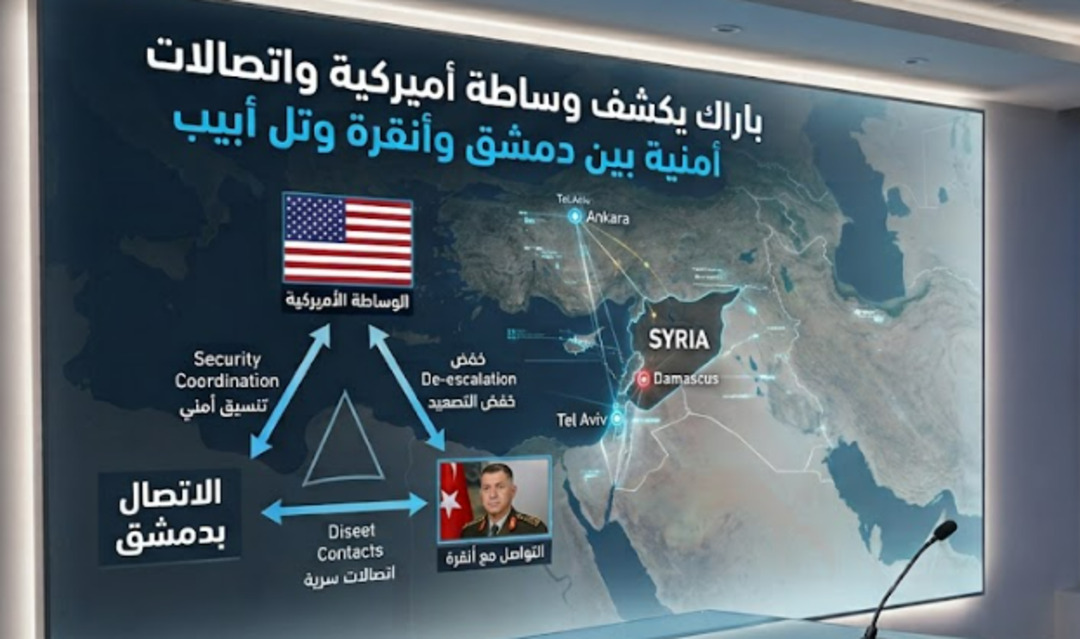
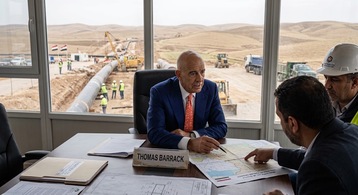
U.S. Special Envoy for Syria and Iraq Tom Barrack revealed that the United States had helped broker an agreement between Damascus and the Syrian Democratic Forces (SDF), noting that SDF commander Mazloum Abdi had announced the dissolution of the forces and their full military integration into state institutions in northeastern Syria.
Barrack also spoke of daily security coordination between Turkey, Israel, and Syria to pursue members of the Islamic State (ISIS), warning that the group was exploiting the existing power vacuum to reorganize its ranks and revive its activities inside Syria.
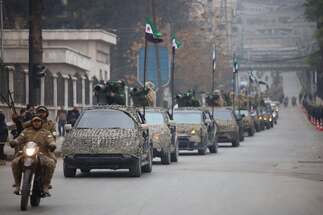
Meanwhile, Israeli Defense Minister Israel Katz described Barrack’s remarks regarding the Israeli strike on the Abu al-Duhur military airfield in Idlib province as “full of inaccuracies,” saying they contradicted U.S. President Donald Trump’s position on the occupied Syrian Golan Heights.
Katz said the strike on Abu al-Duhur airfield was “successfully carried out” after an Israeli warning was ignored. He explained that Israel had provided the United States with intelligence regarding possible Turkish activities inside the airfield. He added that, following consultations with Prime Minister Benjamin Netanyahu, a decision was made to send a direct warning to Damascus, noting that the Israeli military had repeatedly recommended launching a strike against the airfield.
Barrack had previously affirmed that the Golan Heights was Syrian territory occupied by Israel, in violation of United Nations resolutions and international law, despite President Donald Trump’s recognition of Israeli sovereignty over the Golan in 2019—a move that drew widespread international criticism.
### Barrack: Damascus Does Not Seek to Threaten Israel
In an interview with the press, Barrack said that the administration of President Ahmad al-Sharaa had made clear from the outset that it did not want to enter into confrontation with Israel or pose a threat to it. He explained that Damascus had asked Washington to assist with mediation, and that the United States had hosted a series of talks that he described as “highly productive,” including five formal sessions and several informal meetings.
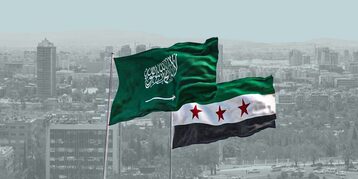
He added that Syria, like Saudi Arabia, had found it difficult to discuss joining the Abraham Accords while the war in Gaza continued and the Palestinian issue remained unresolved. However, he said, Syria had expressed readiness to discuss border-security arrangements and de-escalation measures.
Barrack explained that the Syrian proposal focused on reaching a de-escalation agreement and establishing a peaceful mechanism for monitoring the border. He noted that al-Sharaa’s rise to power had raised concerns in Israel because Israeli officials did not trust the group accompanying him, while Syria had not yet formulated a clear foreign policy.
### Joint Liaison Cell in Amman
Barrack revealed that Syria and Israel had agreed during one of the negotiating sessions to establish a joint liaison cell headquartered in the Jordanian capital, Amman. According to Barrack, the cell includes experts and technical personnel from both sides who communicate on a daily basis. He stressed that direct communication was the only way to prevent miscalculation and avert escalation.
The U.S. envoy said Israel had destroyed most of Syria’s air-force capabilities, adding that, according to his estimates, only 14 or 15 aircraft remained. As a result, the airfields previously used by the Syrian Air Force had effectively been put out of service.
He added that Israel views Syrian airspace as a strategic corridor allowing it to reach Iran, and therefore does not want defensive radars or offensive capabilities that could obstruct its operations. He said Israel uses Syrian airspace to carry out operations against Iran “efficiently and freely,” asserting that it enjoys open access to Syrian airspace.
### Details of the Strike on Abu al-Duhur Airfield
Barrack suggested that Israel may have intercepted conversations concerning a possible Turkish plan to expand a training program at one of the targeted sites. He added that an Israeli field commander may have decided to thwart the plan by destroying the airfield’s runways without notifying the United States or Turkey in advance.
He explained that the strike had been designed to avoid casualties, with the operation limited to destroying the runways in what he described as a “non-lethal” attack, causing no deaths or injuries.
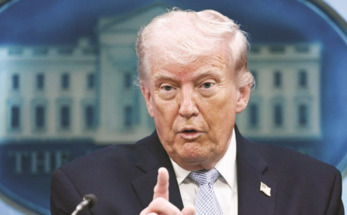
Barrack also referred to a conversation between U.S. President Donald Trump and Turkish President Recep Tayyip Erdoğan regarding Syria. He said Trump had asked Erdoğan why Turkey had not taken control of Syria on December 8, 2024, despite Turkey’s role in supporting the forces that overthrew the former regime.
According to Barrack, Erdoğan replied that Turkey did not seek to control Syria, but wanted it to be “a sovereign and independent state” in a highly complex region.
### Agreement on the SDF and Coordination Against ISIS
Regarding the Syrian Democratic Forces, Barrack said that al-Sharaa’s government had quickly presented a proposal to address the issue, explaining that the United States had helped negotiate an agreement between Damascus and the Kurdish forces.
He added that SDF commander Mazloum Abdi had announced the dissolution of the forces and their full military integration into state institutions in northeastern Syria.
The U.S. envoy also revealed that Turkey, Israel, and Syria engage in daily security coordination to pursue members of ISIS, noting that communications take place every evening. He warned that the group was exploiting the continuing power vacuum in Syria to rebuild itself and expand its activities once again.