-
Tensions in Syria: Israeli Occupation Continues Its Strikes Amid Calls for Political Accountability
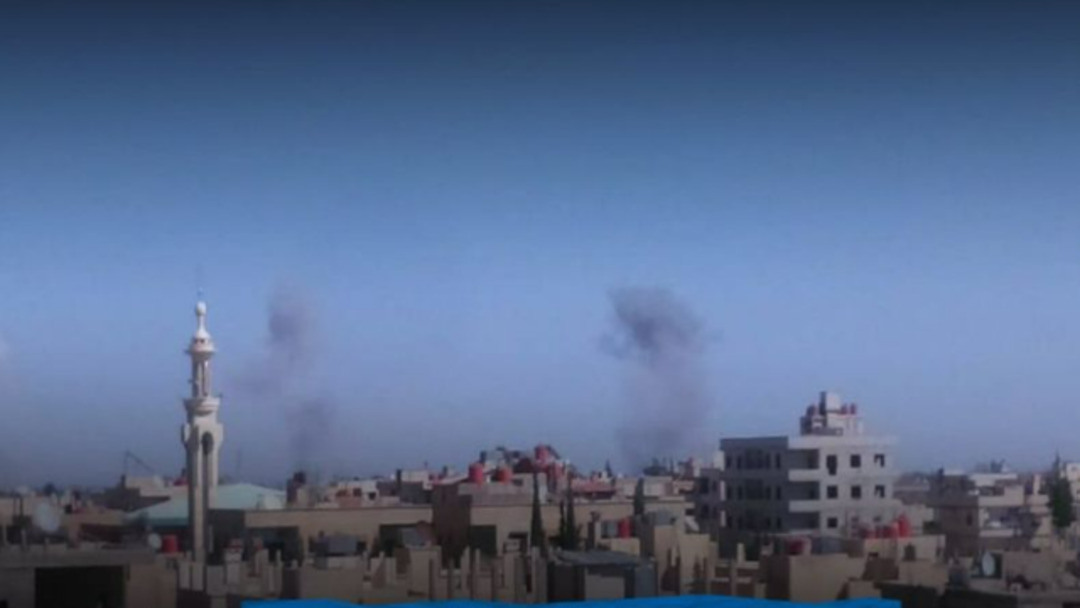
After a series of deliberations on the dramatic developments in Syria, the Israeli army began long-range military operations, and Prime Minister Benjamin Netanyahu instructed the army forces to occupy the buffer zone on the border between Syria and Israel, which was defined by the ceasefire agreement between the two parties in 1974. The aircraft heavily bombed a number of bases officially affiliated with the Syrian army and destroyed weapons depots, under the pretext of “preventing advanced weapons from falling into the hands of armed militias and terrorists,” but observers saw in this “a desire to impose rules for the new regime in Damascus that show red lines.”
Ahmad al-Shar' of the military operations management confirmed on Tuesday the leadership's commitment to holding accountable all those involved in human rights violations and torture crimes against the Syrian people. In a related context, the Syrian Civil Defense announced the conclusion of search operations at Sednaya Prison, noting that no secret cells or potential detainees were found in the inspected locations.
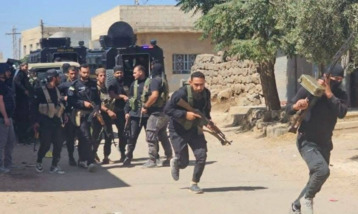
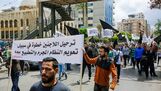
In a new step, the military operations management tasked the head of the "Rescue Government," Muhammad al-Bashir, with forming a new government to oversee the transitional phase in the country. This comes in conjunction with the Syrian Democratic Forces (SDF) escalating their operations, having committed a massacre against protesters in Deir ez-Zor, resulting in the deaths of 10 civilians and injuries to 22 others after opening fire on demonstrations calling for their withdrawal from the city. Developments indicate the presence of crowds affiliated with the Syrian National Army and military operations management around Deir ez-Zor, further heightening tensions.
Earlier on Monday, a meeting took place in Damascus that included al-Shar' and al-Bashir, along with former Syrian Prime Minister Muhammad Ghazi al-Jalali. Special sources informed Syrian TV that the meeting resulted in an agreement to task al-Bashir with forming a new government in preparation for the upcoming phase.
As military operations approach regaining control over the capital and ensuring the stability of public facilities and institutions, the situation in Syria remains complex and influenced by various factors, including increasing military and political pressures.