-
Assassination of Assad’s Adviser in Tartus: Israeli Account Emerges After 18 Years
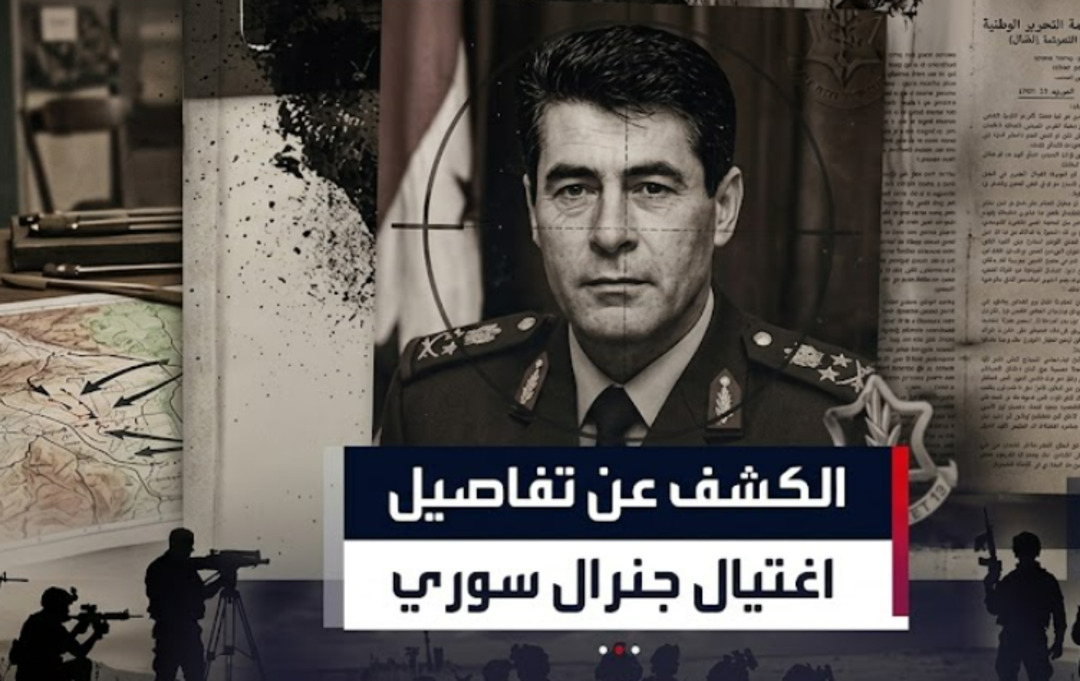
Eighteen years after the assassination of Syrian Major General Mohammad Suleiman, one of former Syrian President Bashar al-Assad’s closest associates, new details have emerged about the operation, which has been attributed to Israel.
On August 1, 2008, Suleiman was having dinner at his seaside summer residence in the Golden Sands area near Tartus when he was struck by several bullets in the head and neck. Reports at the time said the perpetrators withdrew by sea without attracting attention.
Suleiman held an extremely sensitive position within the Syrian regime. He was described as a security and military adviser close to Assad and was reportedly responsible for strategic weapons and military procurement files. He was also linked to managing communication channels with Hezbollah and overseeing the transfer of Iranian weapons through Syria to Lebanon.
### An Operation Carried Out by Sayeret 13
According to former Israeli Prime Minister Ehud Olmert’s memoirs, the operation was carried out by Israel’s naval commando unit, Sayeret 13. Olmert said members of the unit approached Suleiman’s home at night from the sea while he was sitting on the balcony with his guests.
According to the same account, the operatives positioned themselves on both sides of the balcony at a distance of approximately 150 meters. They were able to identify Suleiman with certainty despite the presence of other people at the scene. After receiving the order, they fired three bullets that struck him in the back of the head before withdrawing toward the sea and returning to a waiting boat.
These details correspond with a report published by The Intercept in 2015, based on secret documents from the U.S. National Security Agency leaked by Edward Snowden. One of the documents directly attributed the operation to Sayeret 13, describing it as the first known Israeli operation targeting a Syrian government official of such seniority.
### Why Was Suleiman Targeted?
Before his assassination, Suleiman had been linked to several highly sensitive issues considered important to Israel. He was reportedly among the few figures within the Syrian regime who knew the details of Syria’s nuclear program. His name was also associated with the Deir al-Zour facility, which Israel destroyed in an airstrike in 2007.
The New Yorker reported that Israeli officials considered Suleiman one of the few Syrian officials aware of the facility’s existence. An Israeli official also described him as managing what was known as the regime’s “shadow army,” including the transfer of Iranian weapons to Hezbollah.
Leaked U.S. documents indicated that Suleiman served as Assad’s special adviser on strategic weapons, sensitive military operations, and Lebanese affairs, including relations with Hezbollah.
### Israel Comes Under Suspicion
Damascus did not officially assign responsibility for the assassination to any party. Syrian authorities also imposed restrictions on media coverage of the case, and early reports did not clearly disclose the victim’s identity.
In a leaked U.S. diplomatic cable later published by WikiLeaks, Syrian security agencies identified Israel as the prime suspect, citing Tartus’s coastal location, which would have allowed a naval force to approach the target and withdraw with relative ease. The cable also suggested that the use of a sniper indicated that the perpetrator knew Suleiman’s identity and could distinguish him from a distance.
At the same time, theories emerged suggesting that the assassination may have resulted from an internal power struggle within the Syrian regime, particularly amid tensions between prominent security and military figures. The Guardian reported in 2008, citing sources, that Suleiman may have been the victim of internal disputes, including tensions between Bashar al-Assad and Assef Shawkat, who was then head of Syrian military intelligence.
However, the release of NSA documents in 2015 significantly strengthened the account implicating Israel, after the documents pointed to the involvement of the Israeli naval commando unit.
### Links to Syria’s Nuclear Program
Suleiman’s assassination took place less than a year after Israel destroyed Syria’s nuclear facility in Deir al-Zour. According to the Combating Terrorism Center at the U.S. Military Academy at West Point, Suleiman was connected to the management of Syria’s nuclear program. His assassination was therefore viewed as a potential blow to Damascus’s ability to rebuild the program.
The account that has emerged describes a daring security operation inside Syria: a maritime infiltration of the Syrian coast, an approach to the home of a senior security official, his assassination while dining with guests, and an escape without an armed confrontation or an official Israeli claim of responsibility.
Eighteen years later, Olmert’s memoirs and the leaked U.S. intelligence documents have strengthened the belief that Israel carried out the operation through Sayeret 13, despite Israel’s continued official refusal to acknowledge responsibility.