-
Syria’s Women’s Protection Units Fighters Face Uncertain Future After Army Integration Bid Rejected
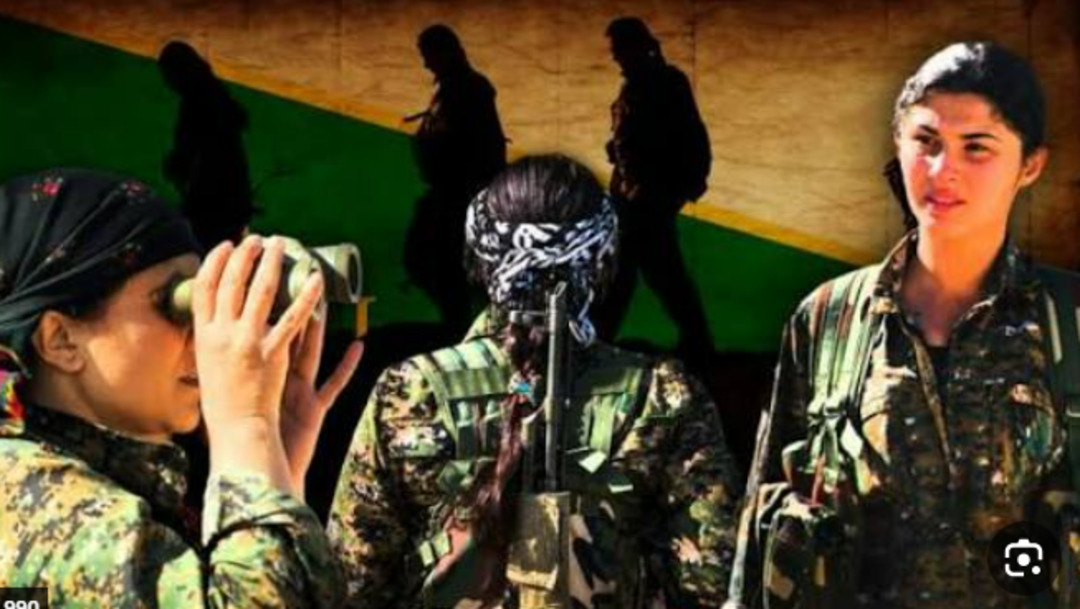
After years of fighting against ISIS, female fighters from Syria’s Kurdish Women’s Protection Units face an uncertain future as the army is restructured and former armed factions are integrated into state institutions.
While commanders and members of the Syrian Democratic Forces (SDF) have begun transferring to the Ministry of Defense, the women’s units’ leadership says its proposal to join the army as an independent military formation was rejected, prompting it to explore an alternative through the Ministry of Interior.
Norozeh Ahmed, commander of the Women’s Protection Units, told Reuters in an interview at a military base in Qamishli that she met with Syrian President Ahmad al-Sharaa in Damascus last week and was informed that there would be no place for the unit’s female fighters in the army.
Norozeh explained that the units had proposed forming an independent women’s brigade or battalion within the military, based on the experience the fighters had gained during the war against ISIS.
“We aimed to join the army because our forces have the experience needed to protect themselves in an organized manner, as part of an independent brigade or battalion,” she said.
She stressed that the key condition was to keep the fighters within a cohesive and organized force, rather than distributing them among small groups or transferring them individually to different areas. She said the proposal was rejected.
The Syrian ministries of defense and interior have not yet issued any official clarification regarding the talks. As a result, the details of the meeting and the rejection of the proposal remain, according to the reports, an account provided by the unit’s commander rather than an officially announced Syrian position.
### An Option Through the Ministry of Interior
After efforts to join the army stalled, the Women’s Protection Units opened a channel of communication with the Ministry of Interior and proposed joining the special operations forces, which they consider closest to the nature of their fighters’ expertise.
Norozeh said the units include more than 1,500 female fighters and that she had asked ministry officials whether the entire force would be integrated. She added that she was awaiting a response in the coming days.
Nour al-Din al-Baba, a spokesperson for the Ministry of Interior, previously said in remarks to the Kurdish channel Rudaw that the unit’s female fighters would be welcome in the ministry, without specifying the duties that might be assigned to them.
Al-Baba explained that forces affiliated with the ministry could be deployed across Syria and would not remain confined to a single geographical area. This could conflict with the units’ condition that their formations be preserved and their members not be distributed individually.
Sources familiar with the discussions said the Syrian authorities had previously proposed that the fighters join the tourism police, which includes a limited number of women. However, a spokesperson for the units denied receiving such an offer.
### Concerns Beyond Military Service
The talks come after the official announcement of the dissolution of the SDF and the appointment of its former commander, Mazloum Abdi, as an adviser to President al-Sharaa, alongside the incorporation of several former commanders and fighters into the Ministry of Defense.
However, Syria’s new army does not include women, leaving more than 1,500 female fighters outside the integration arrangements announced so far.
The Women’s Protection Units, together with the US-backed SDF, took part in battles that led to ISIS being driven from large areas of northeastern Syria. Their female fighters consequently became some of the most prominent figures internationally associated with the war against the group.
Many of the fighters do not view the issue as merely a matter of military employment. Rather, they see it as a guarantee for preserving the social gains achieved by women in Kurdish areas during the years of war.
“Women are always viewed as weak. We do not derive our strength from men or from the current state, and we insist on maintaining our own distinct identity,” said Goxso Jiyaker, a 20-year-old fighter.
Meanwhile, Banaber Baran, a unit commander, said Syria’s constitution should guarantee the fighters a clear role, adding: “To this day, we have not waited for anyone to defend us. We women defended ourselves.”
**Source: Sky News**